
North Dakota is a big prairie with a river running through the middle. And that is where the state capital is. In Bismark. Between Medora and Bismark, is about 140 miles of I-94. And although we normally try to stay off the major highways, there wasn’t much of a choice. So, we hopped on, did our normal 60-65 mph and tried not to get run over when the speed limit is 80!!
At the RV park, we got hooked up and noticed a lot of Airstream RV’s already there. We found out there was the International Airstream Rendezvous in Minot starting a couple of days. More on this later as we discovered more details.
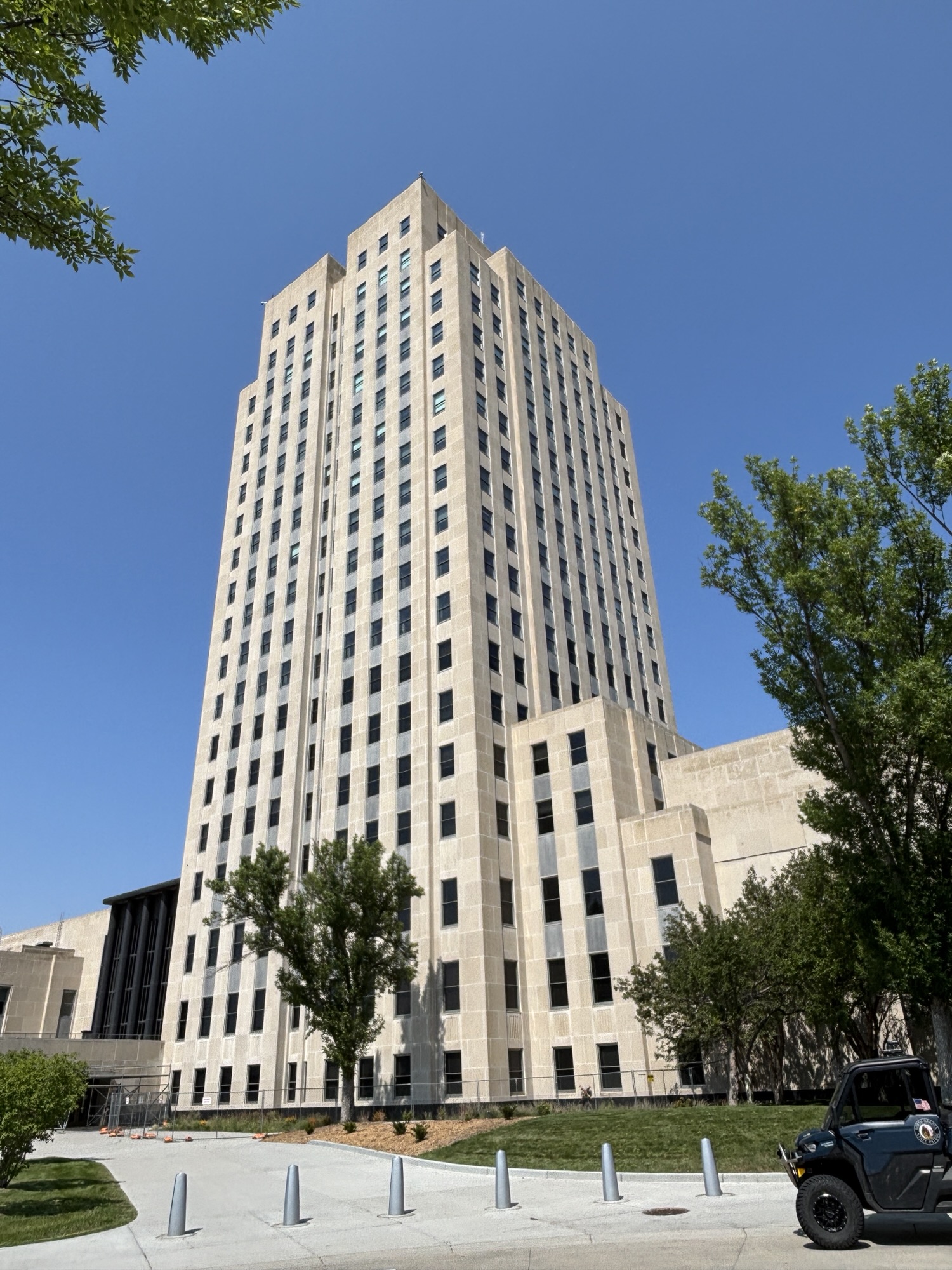
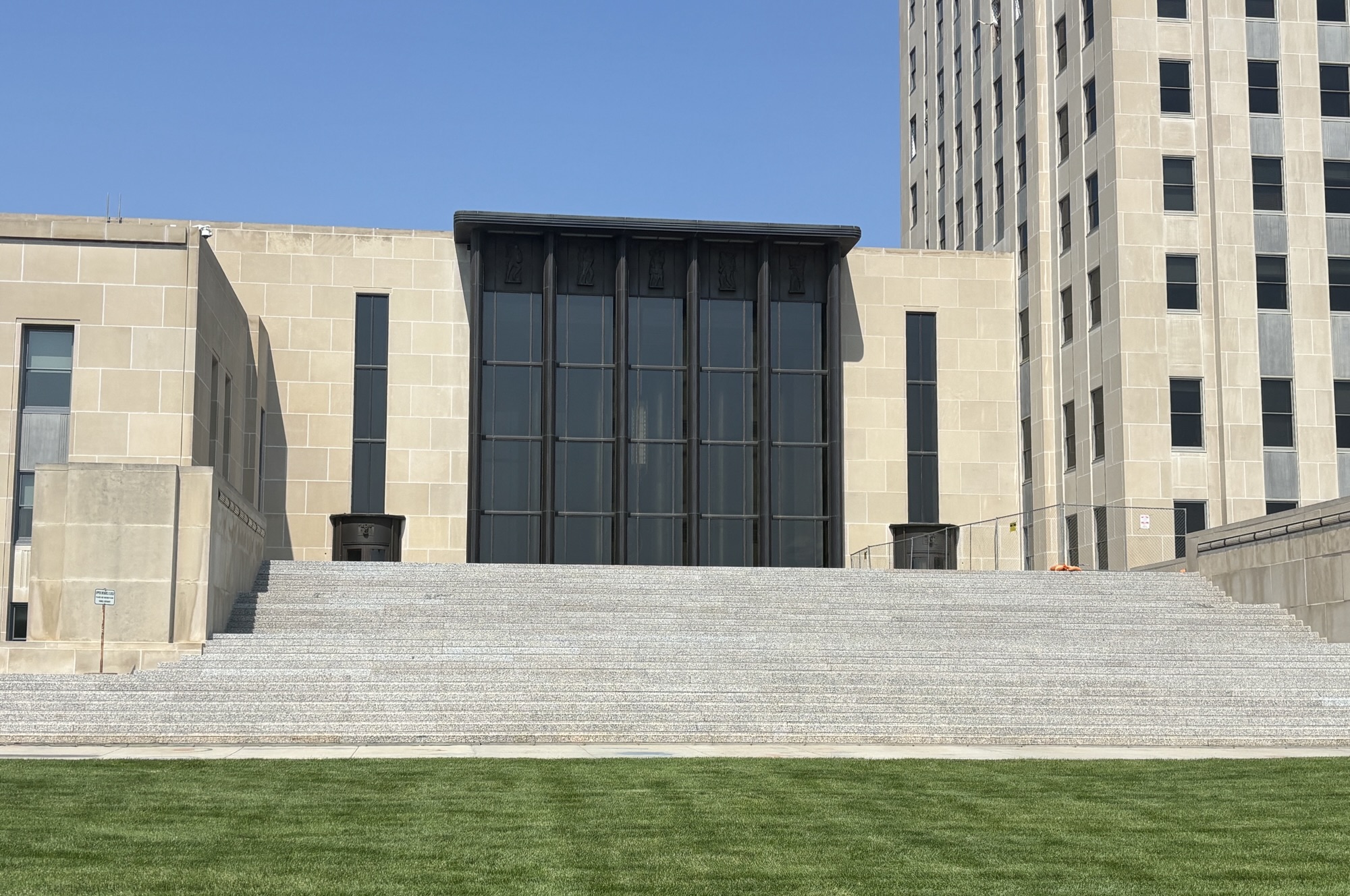
The next morning and after taking care of some business and a quick trip to Walmart, we headed downtown to visit the capitol. This is a unique and very visible building in the center of the city. And its uniqueness is obvious because of its 18-story tall rectangular shape with no dome structure that is typical of many capitol buildings. And because it is so tall, it is visible from everywhere. And its Art Deco style also makes it very different among other capitols. It was built in 1932-34 after the original capitol from when North Dakota had become a state burned down.
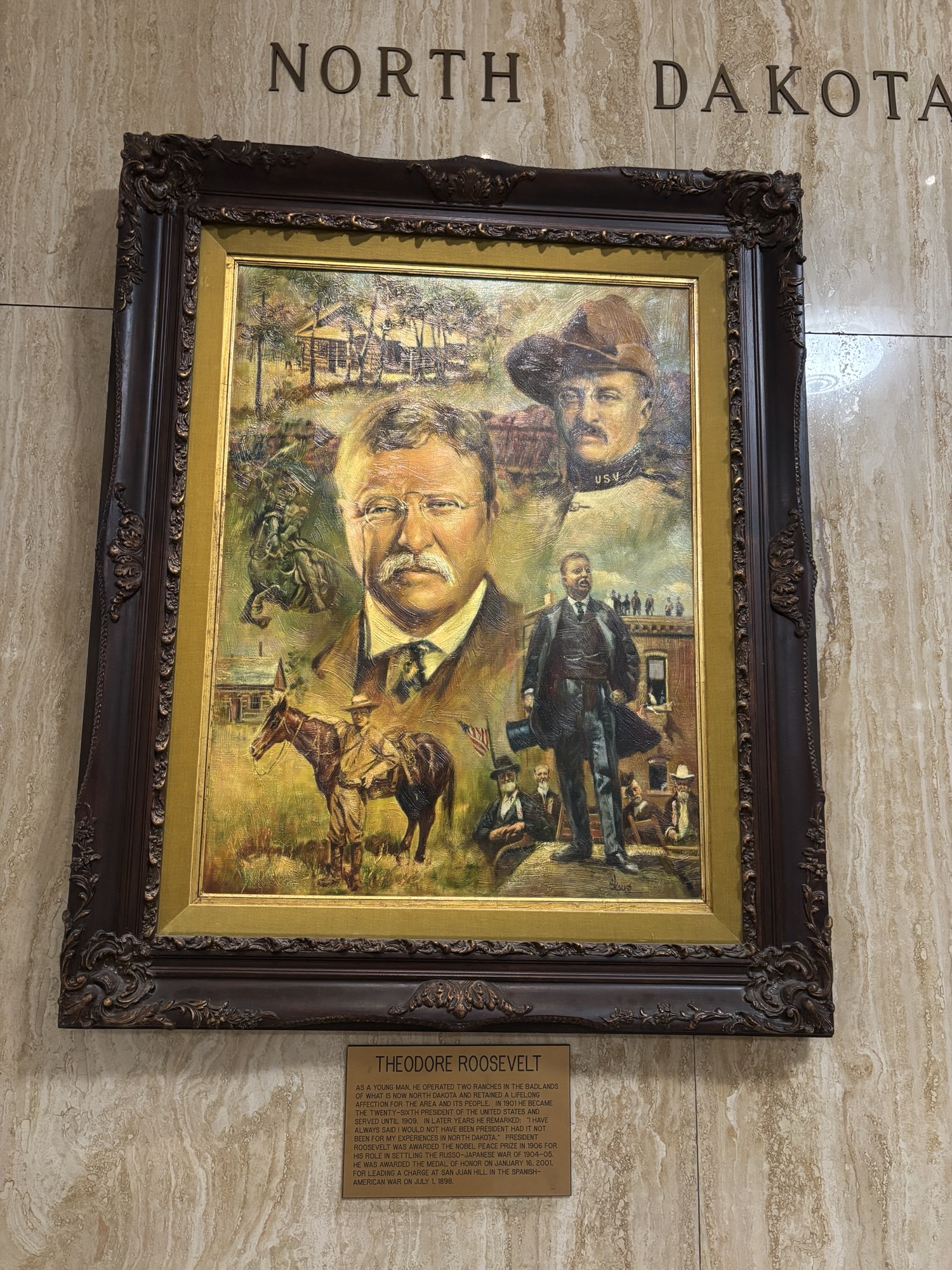
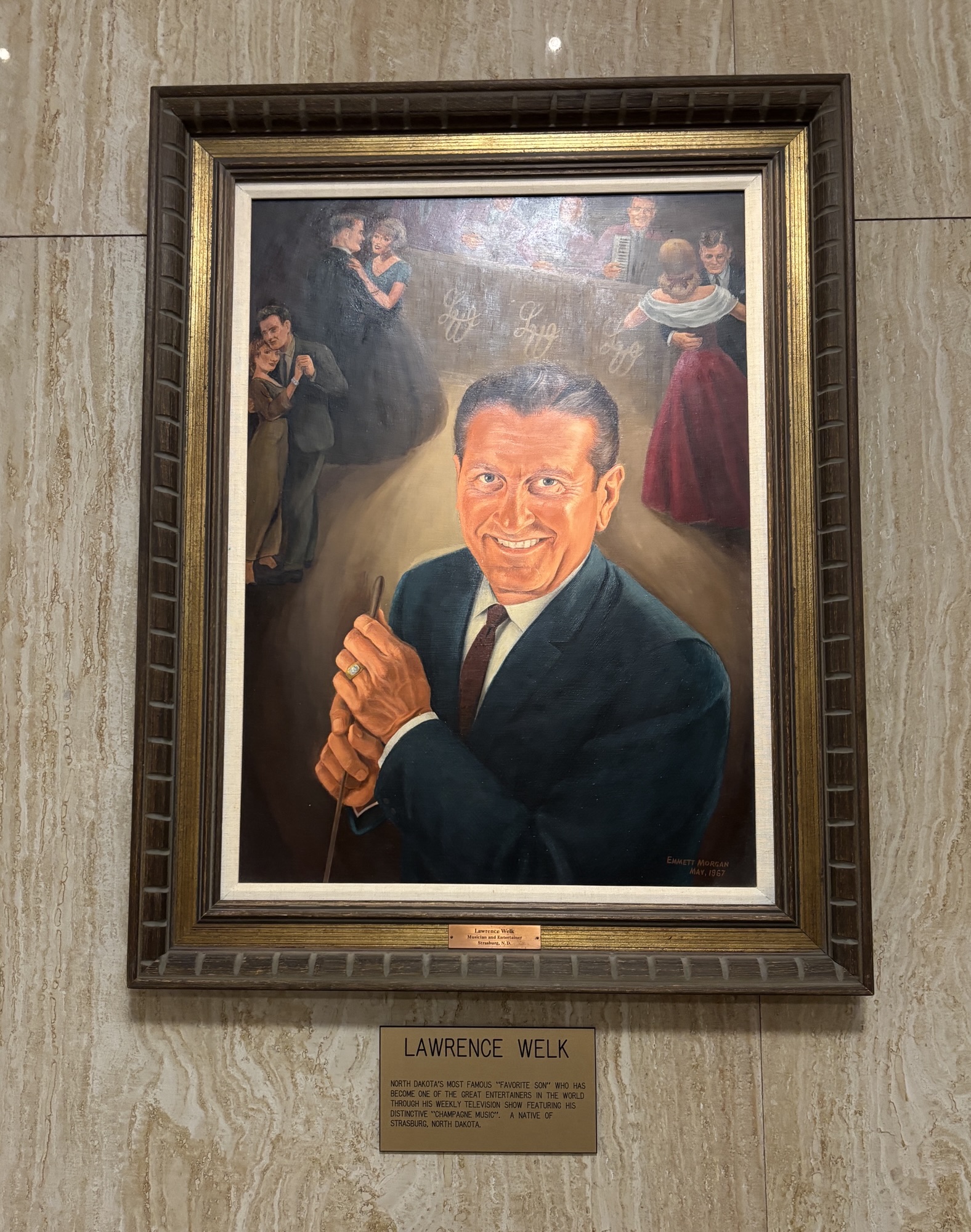
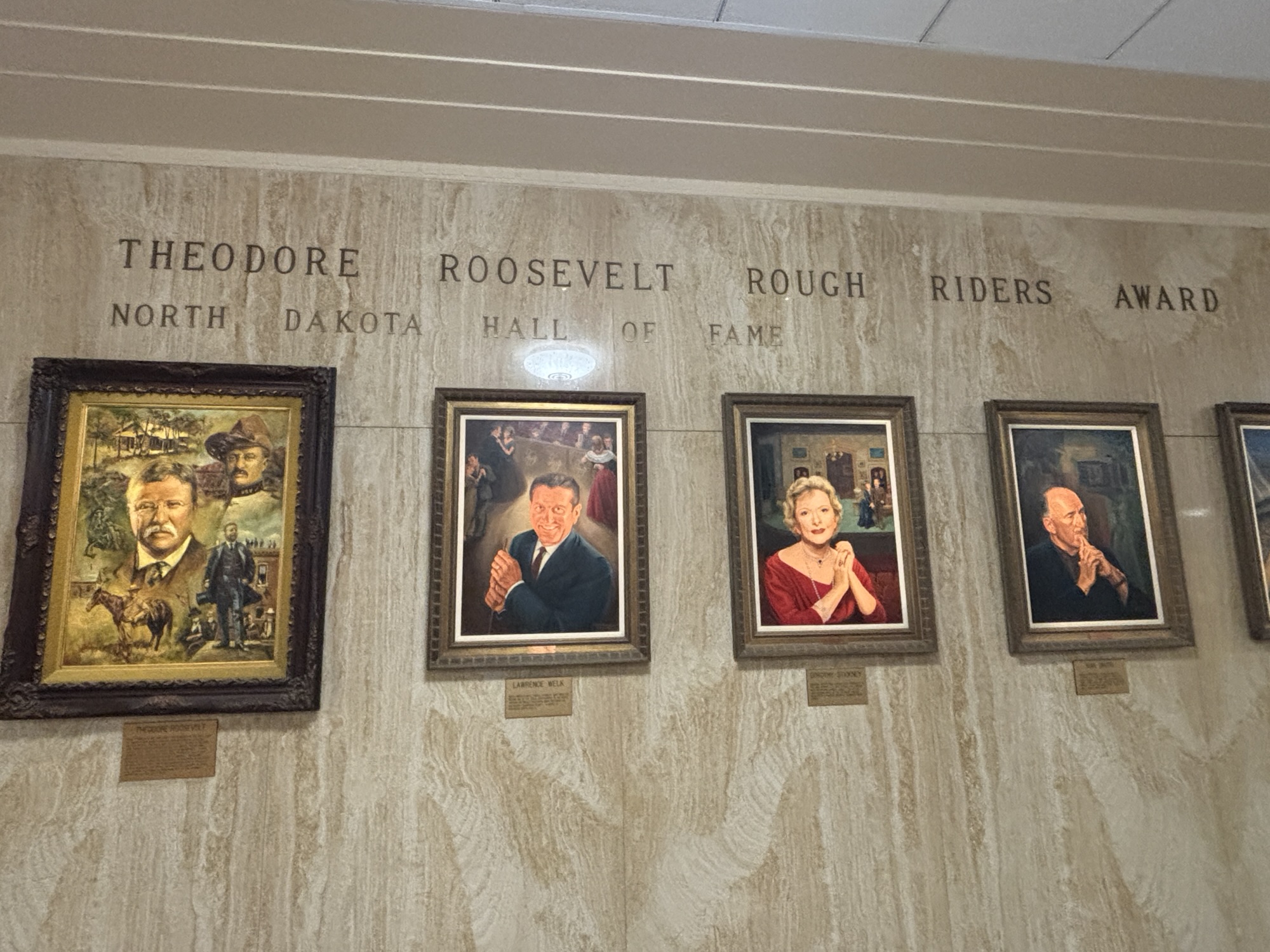
On the ground floor, there is a wall of recognition of those from North Dakota that have achieved renown in their fields. The award is called the Theodore Roosevelt Rough Rider Award. The first recipient was Lawrence Welk from Strasburg, ND in 1961 who was famous for his accordion music and his TV show from 1951-1982! A one and a two! Some others were Roger Maris of the NY Yankees in 1964, Western author Louis L’Amour in 1972, NBA basketball star and coach Phi Jackson in 1992, 1950’s singer Bobby Vee in 1998, and the most recent award was to Steve Scheel in 2024 for his retail business. All totaled there have been 50 awards.
On a side note, and a personal comment, there was someone not mentioned but surely to be considered in the future. I think we should start a huge grassroots campaign for the famous The Electric Company TV personality from the 1970’s named Fargo North and his equally famous Decoder machine! Say it fast. You may remember him! Fargo North, Decoder!
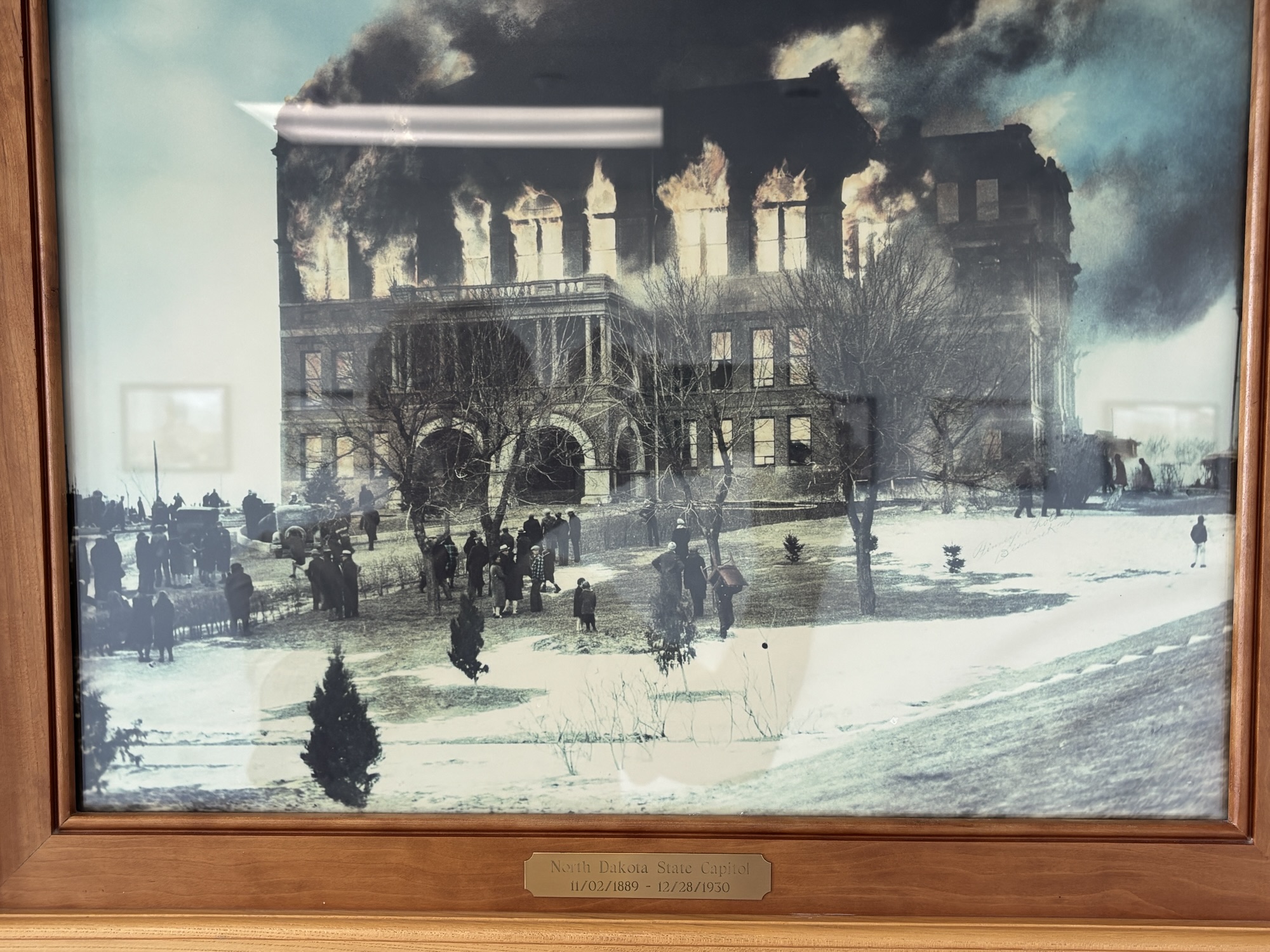
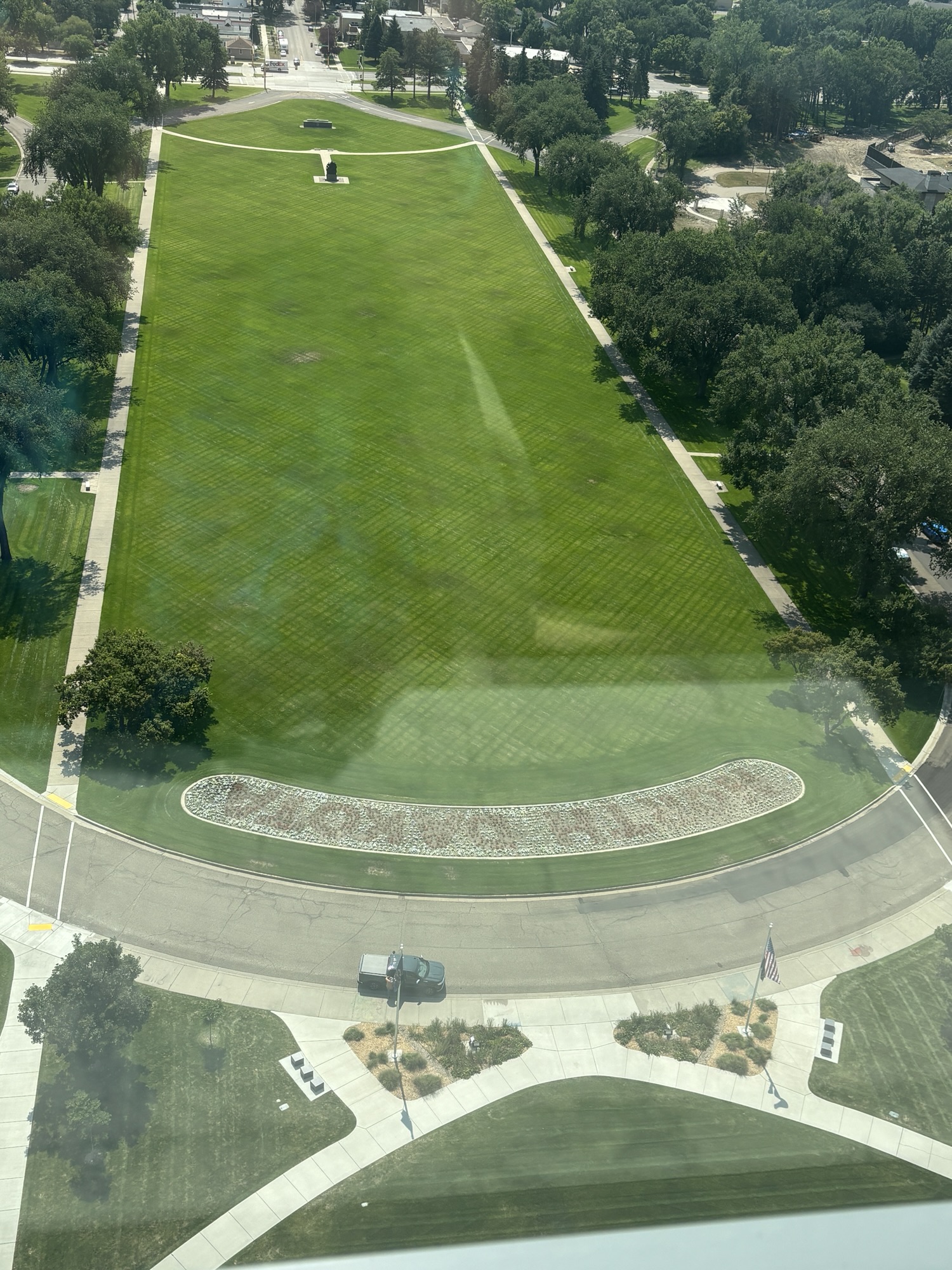
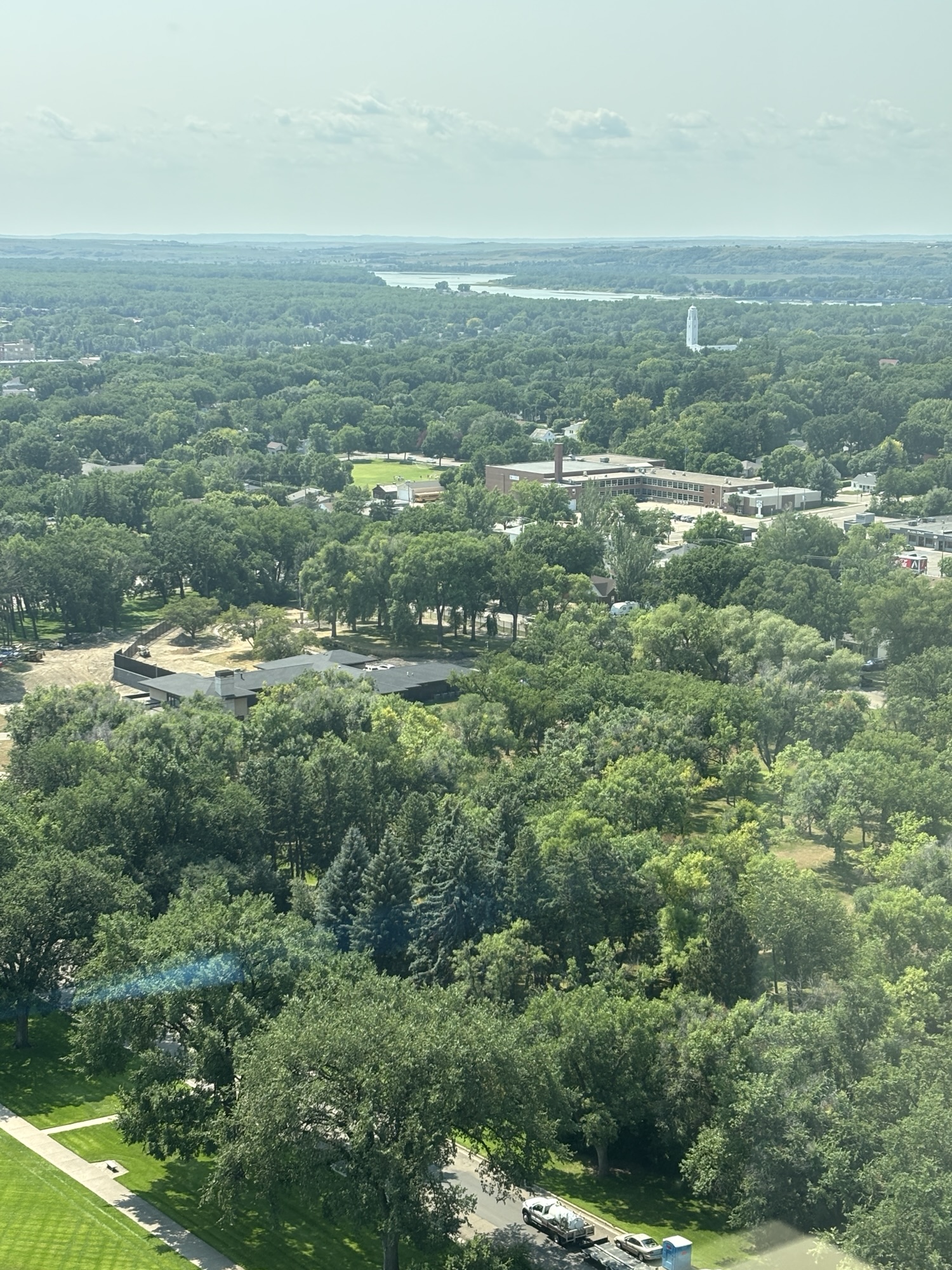
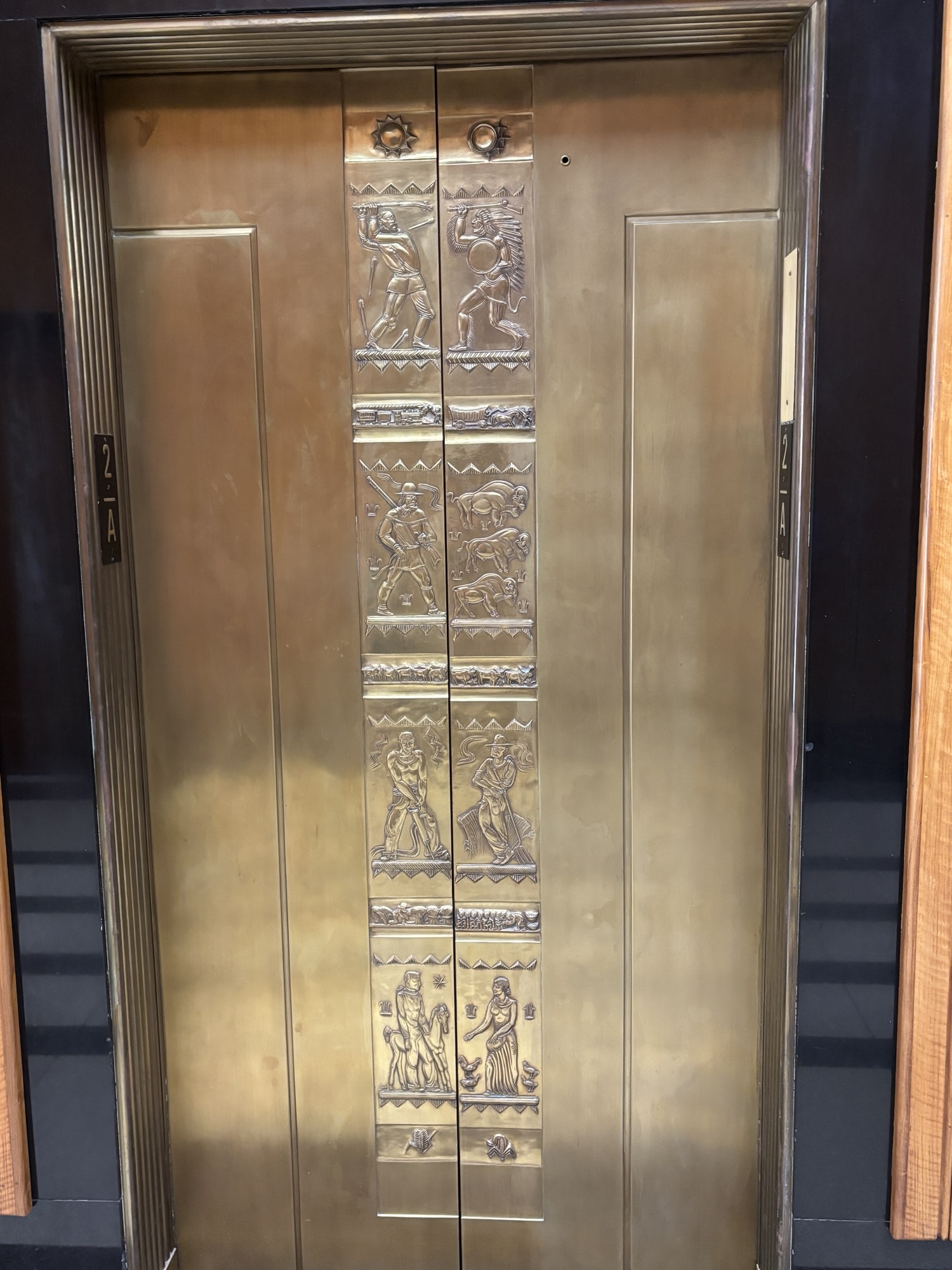
Next up was an elevator ride to the 18th floor observation level. Besides the view of the city, there were historical photos along the walls, some highlighting the previous capitol and the story of the fire.
Back down to the 1st floor, we ducked into the House and Senate chambers. We were the only ones around. Lots of desks with microphones as you would expect. A key feature were the ceiling lights that are designed to represent the Moon and Stars in the house and Sunrise and Sunset in the senate. There are 47 senators, one for each district. And 94 house reps, two for each district, and desks for each one.
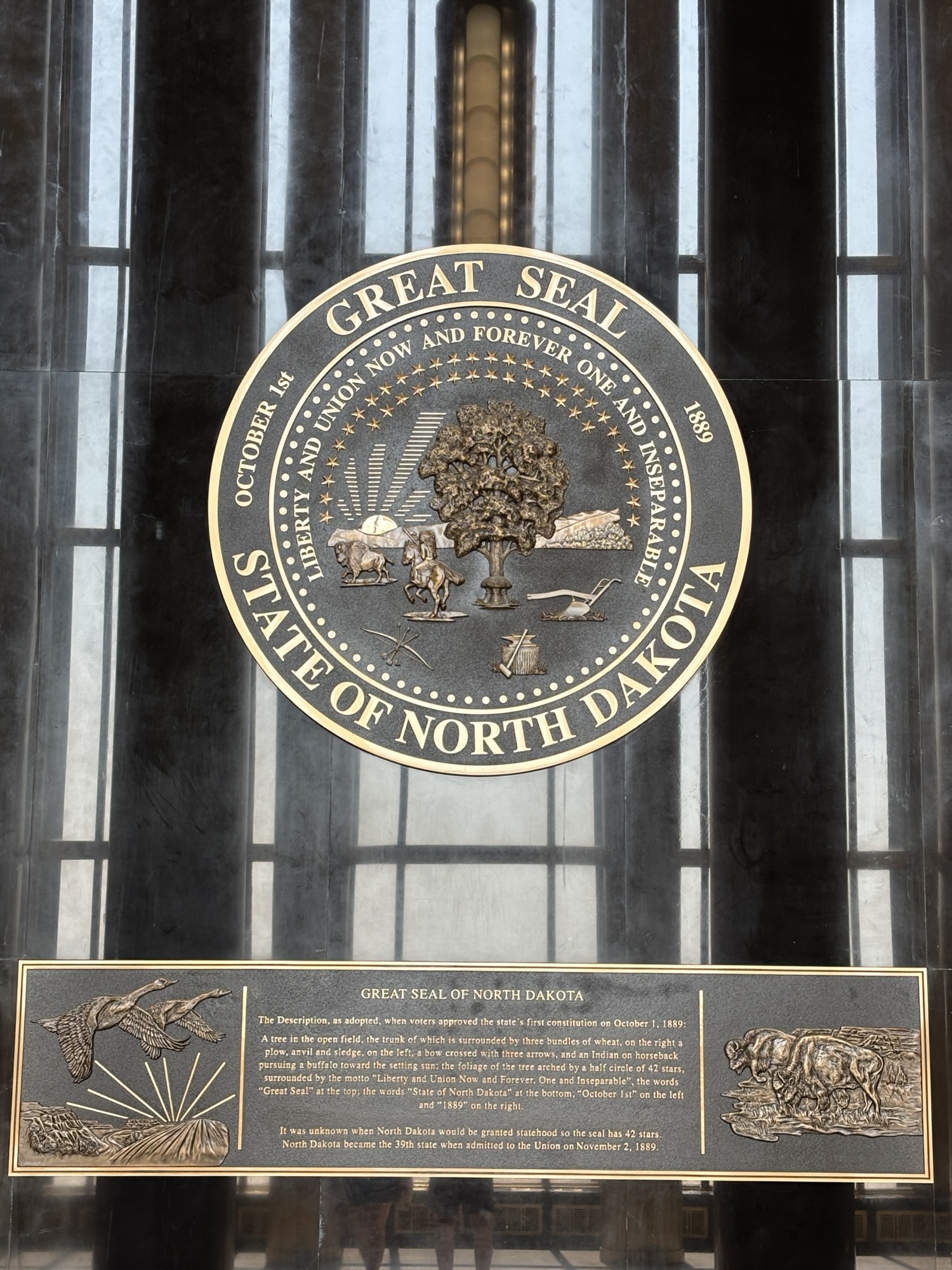
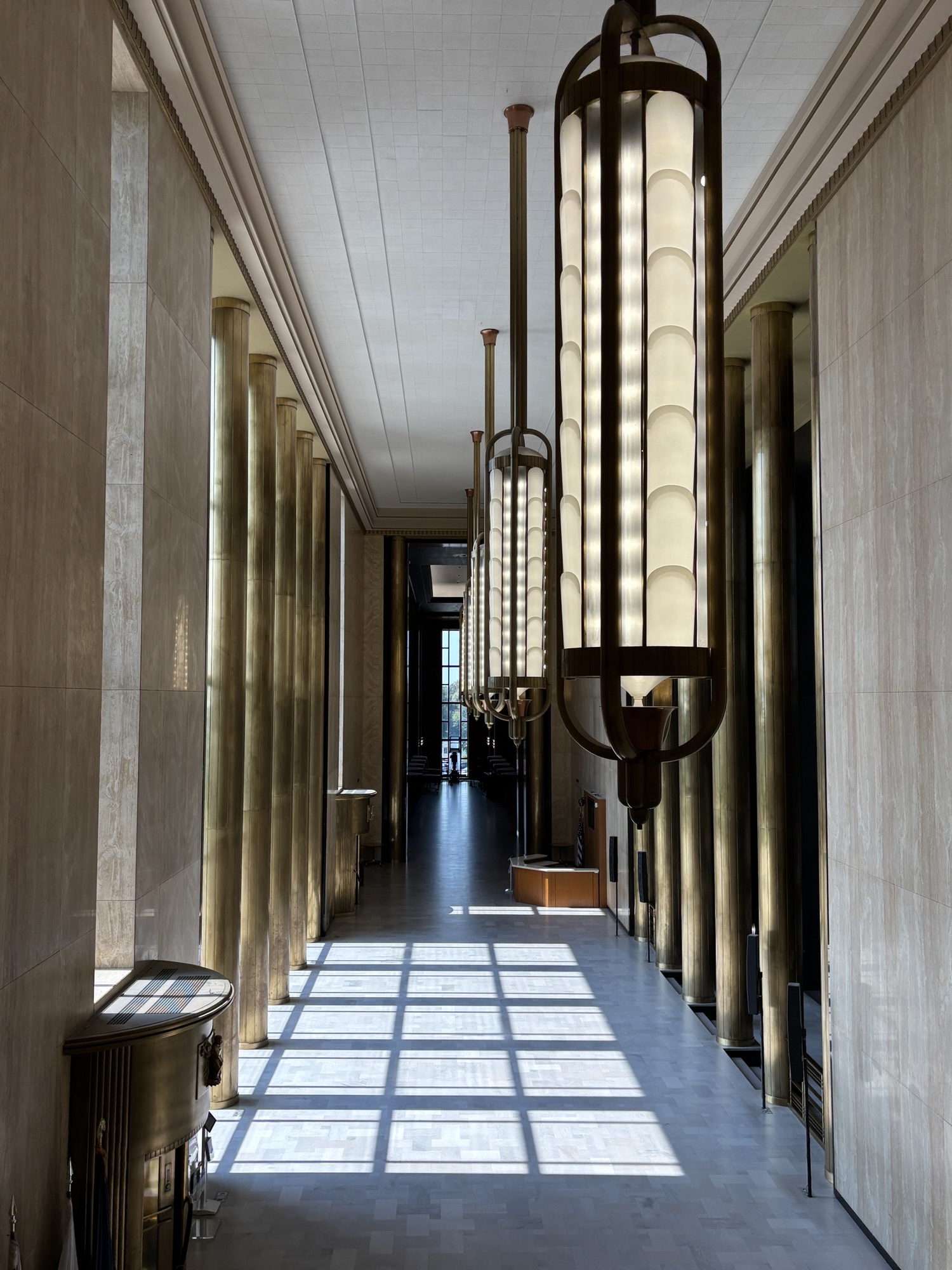
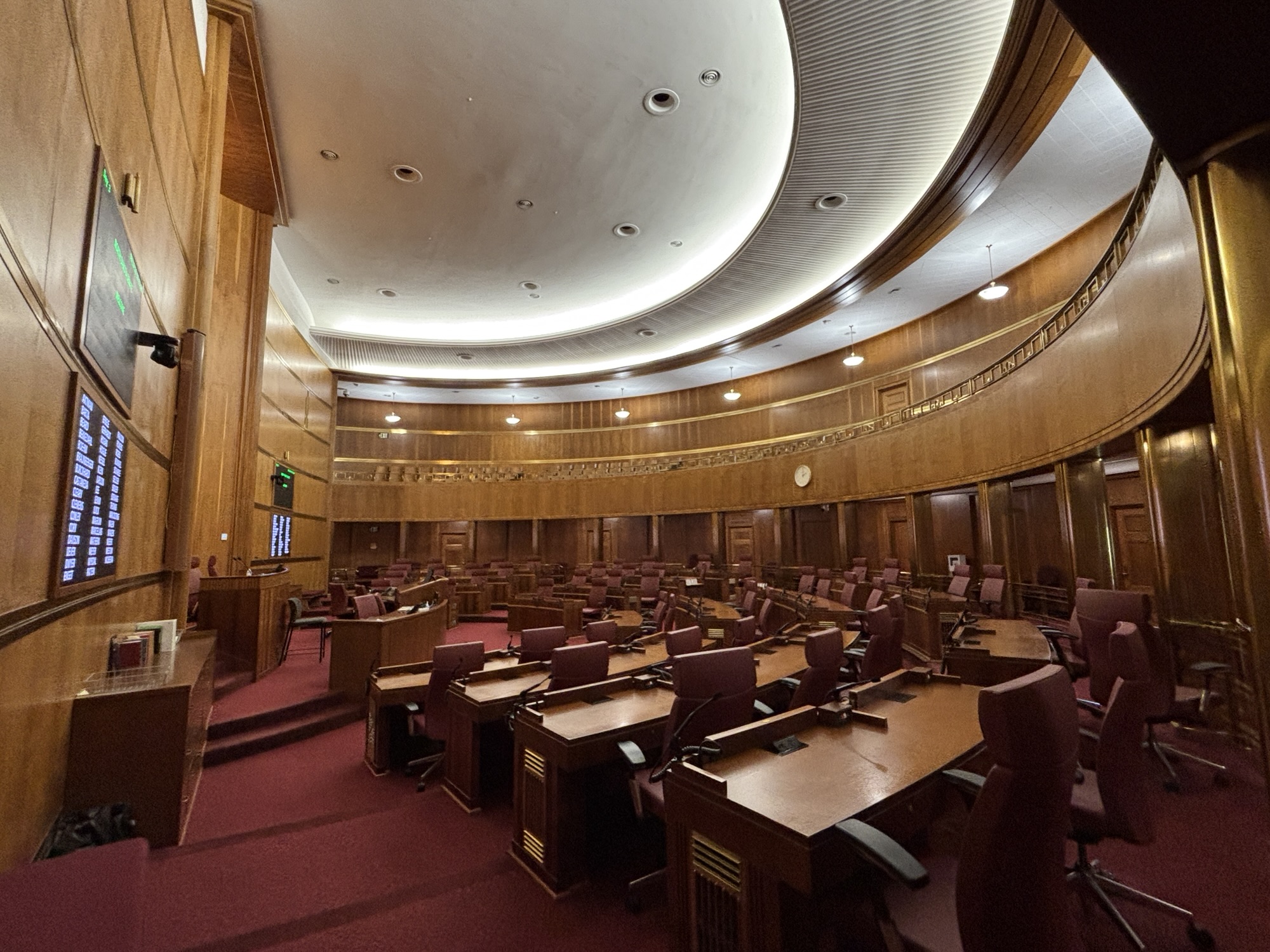
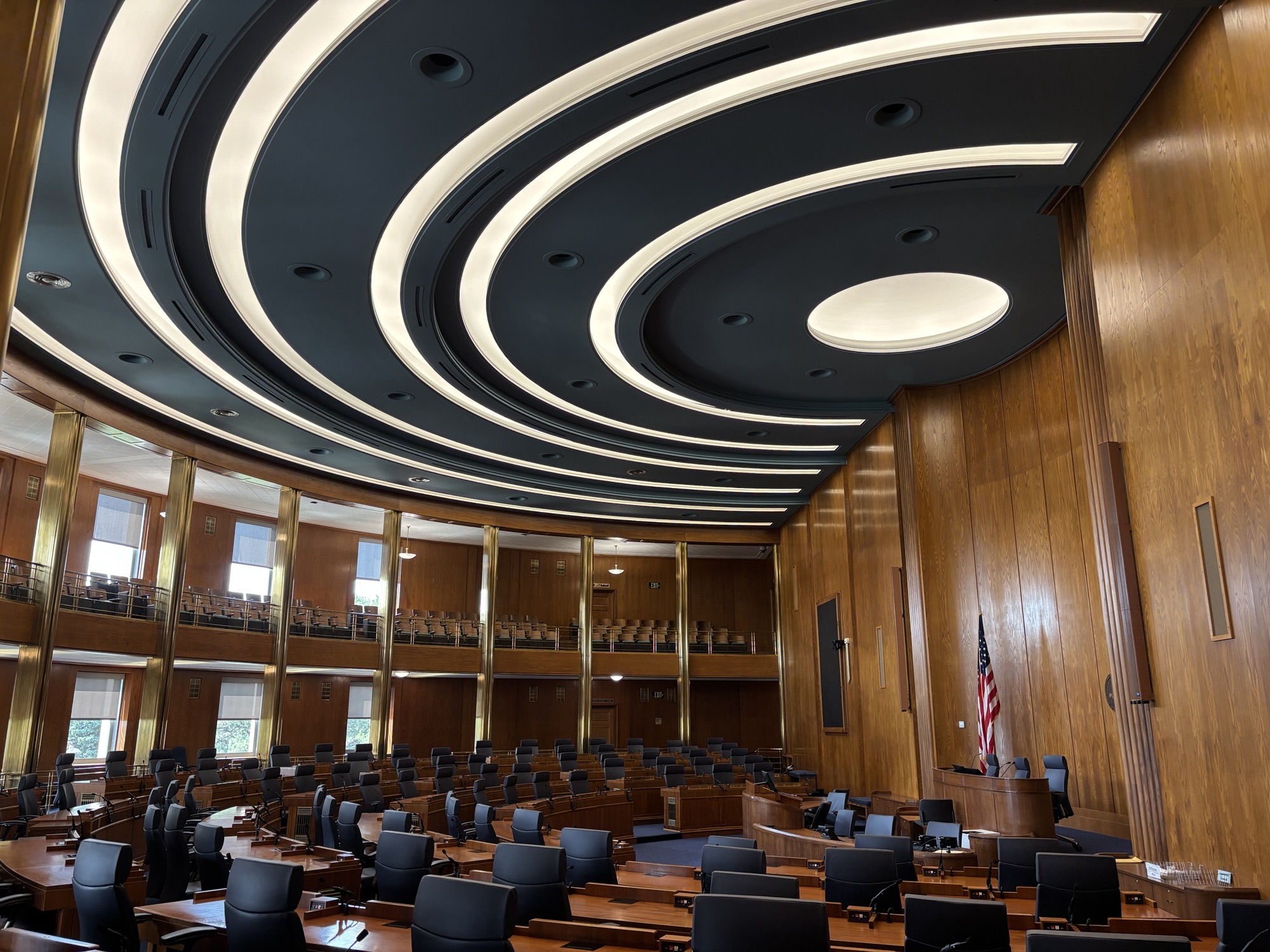
We met Karla Rose Hanson, a rep from Fargo, in the hall and asked her about the seating assignments. She explained that the seats are selected by members with the most senior getting to choose first. And the junior member of that district gets to choose right after the more senior. And the first seats normally selected are on the back row for several reasons. You can see what’s happening in front, you can sneak out early, and/or you to go to the bathroom without making a scene!
She was very nice and informative about our other questions as well. She is term limited this year so she’s not running again for rep. But I would vote for her next time she’s up for any election.
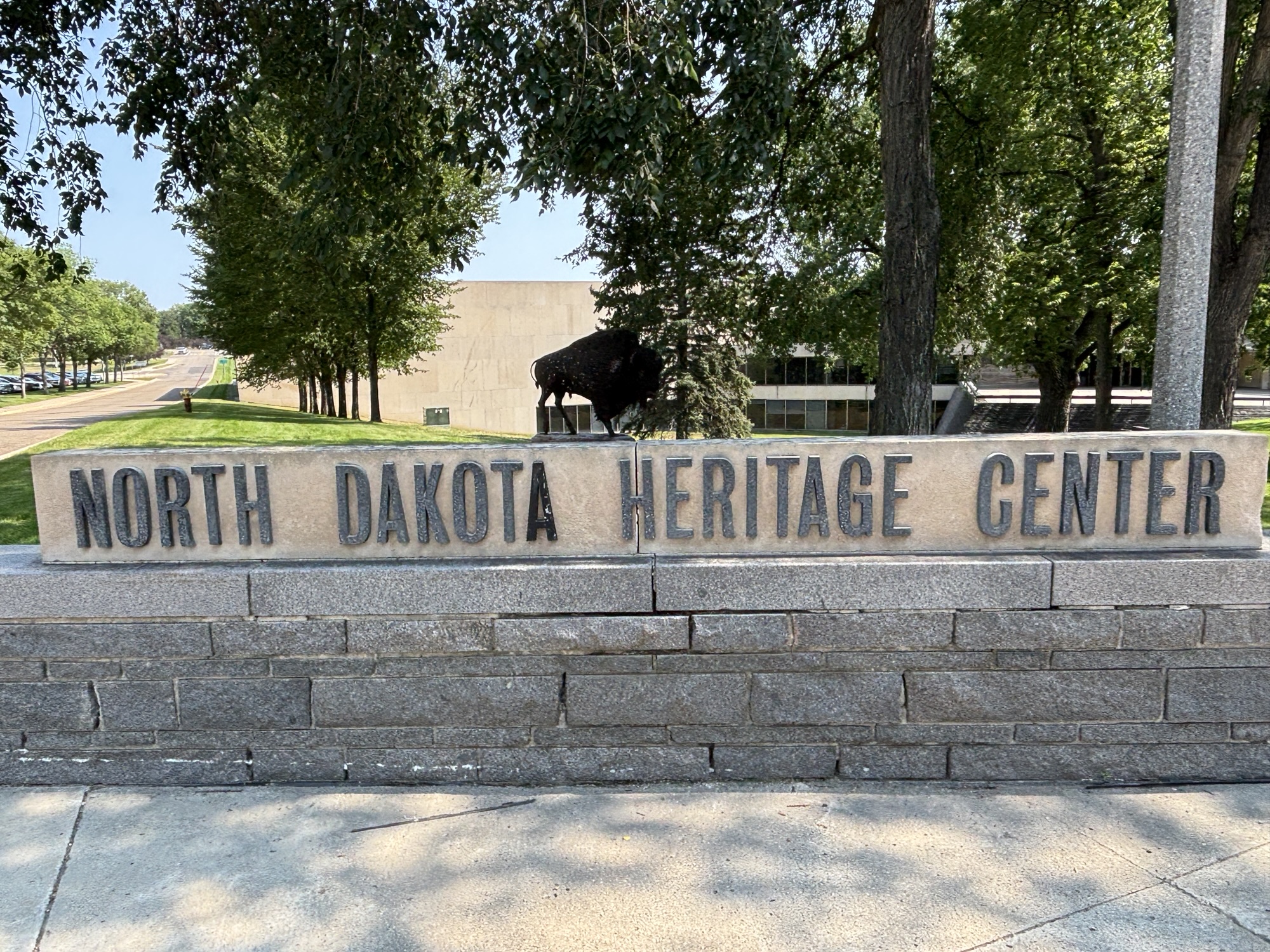
After the capitol, we headed to the Heritage Center & State Museum. It was divided into sections, and we ducked into a couple. But we had already seen lots of dinosaurs and other miscellanea of history, so we didn’t stay long.
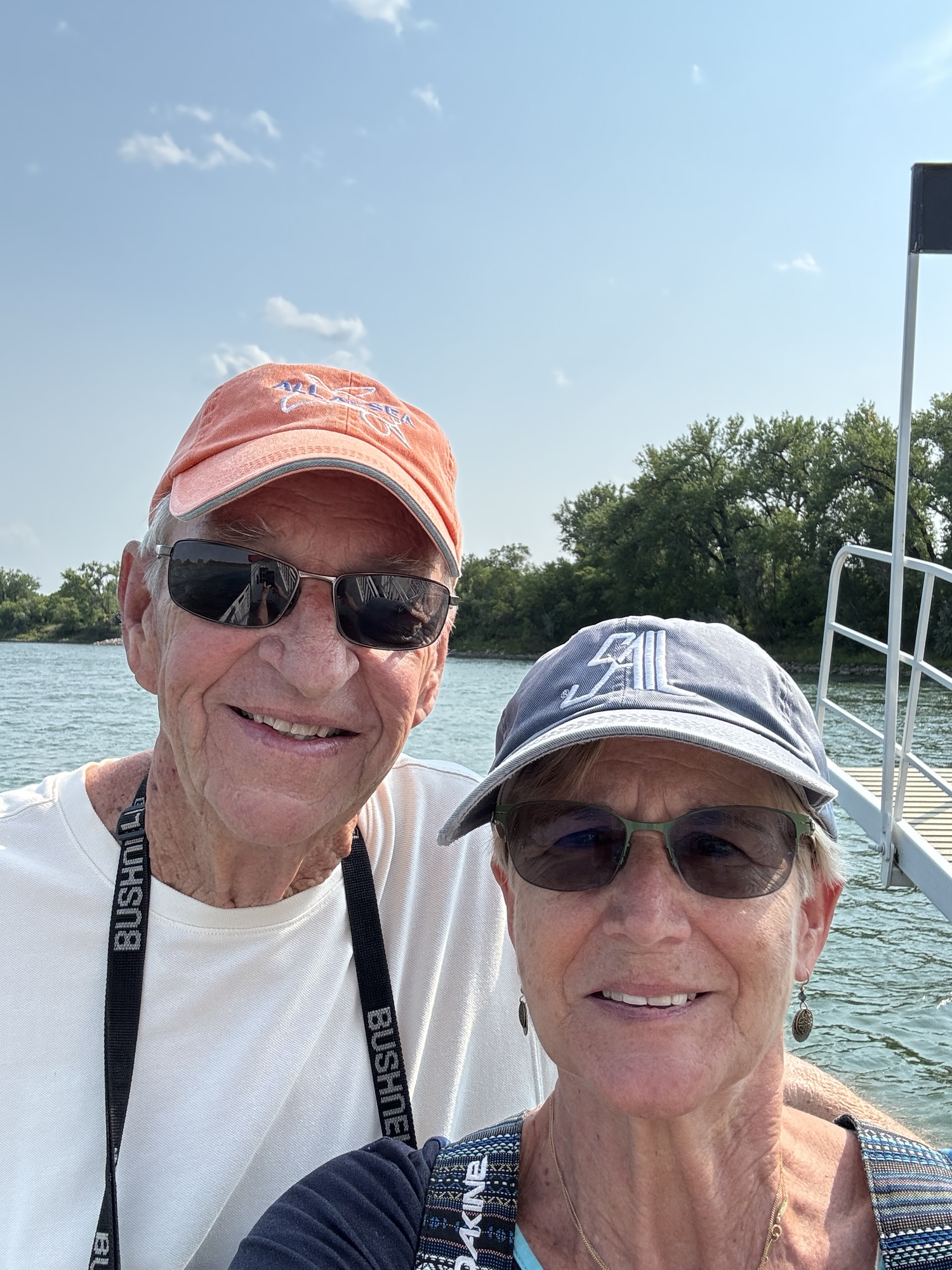
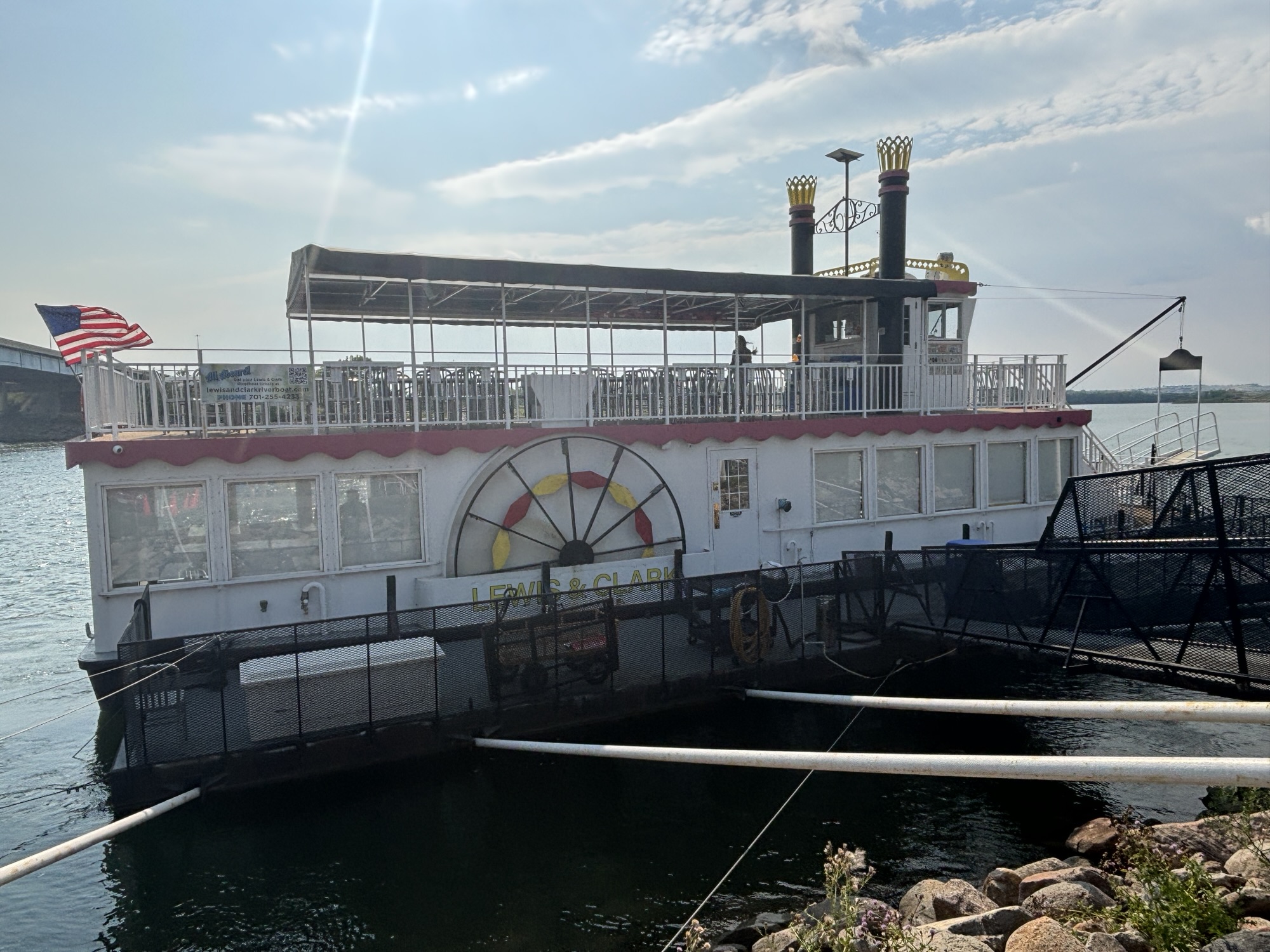
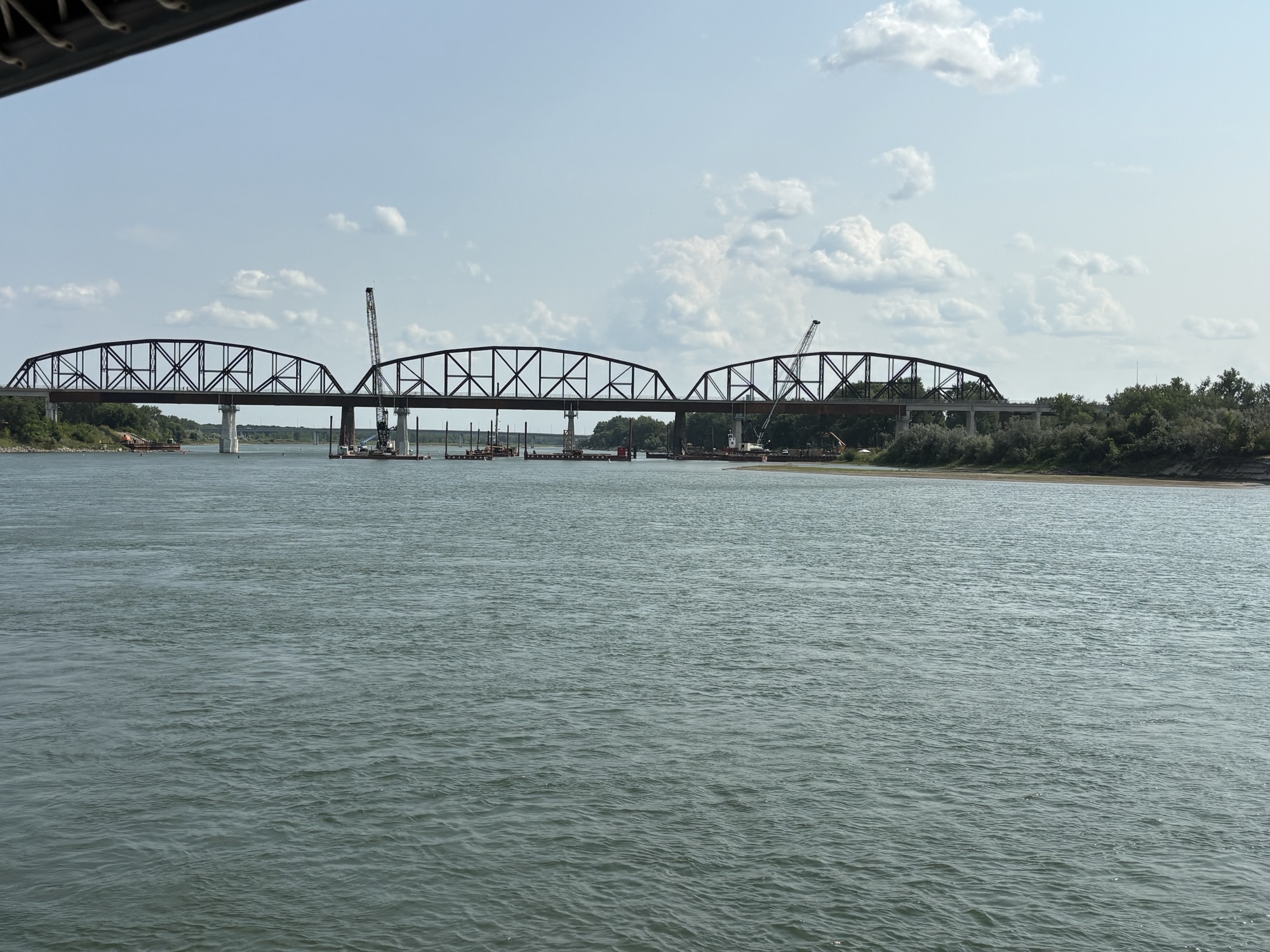
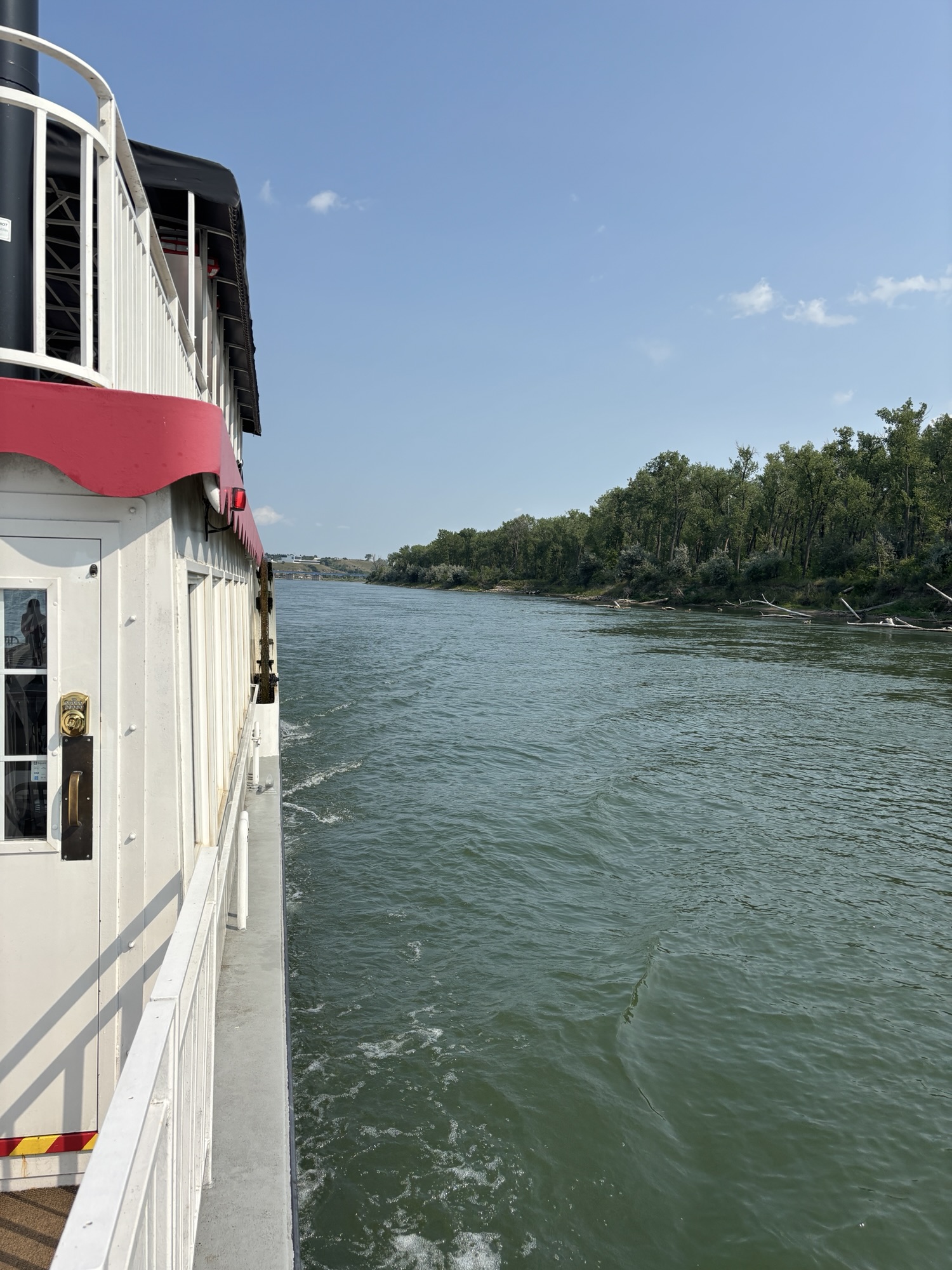
Instead, we headed to the river and a scheduled riverboat ride on the Missouri River. The boat was modeled on an old side-wheeler steamboat with two decks. And maybe 30-ish passengers. The ride was supposed to be an hour long and headed up the river for about 45 minutes. The scenery wasn’t too exciting, so we watched a video for a few minutes about the building of the Garrison Dam and its effect on the villages along the river. Then the captain turned around and, running at the same rpms, made it back to the dock in 15 minutes being helped by a 5 kt current!
Back at the RV park, we were settling in when we met Nancy & Rick Brown in an Airstream heading to Minot. We had not ever been in an Airstream, so it was a chance to see what they are all about. We sat and talked in their RV until about 9:00. Somewhat of a first for us up so late! They are retired from Guntersville, AL and both have tech backgrounds. So, we had a lot in common. Very nice couple!
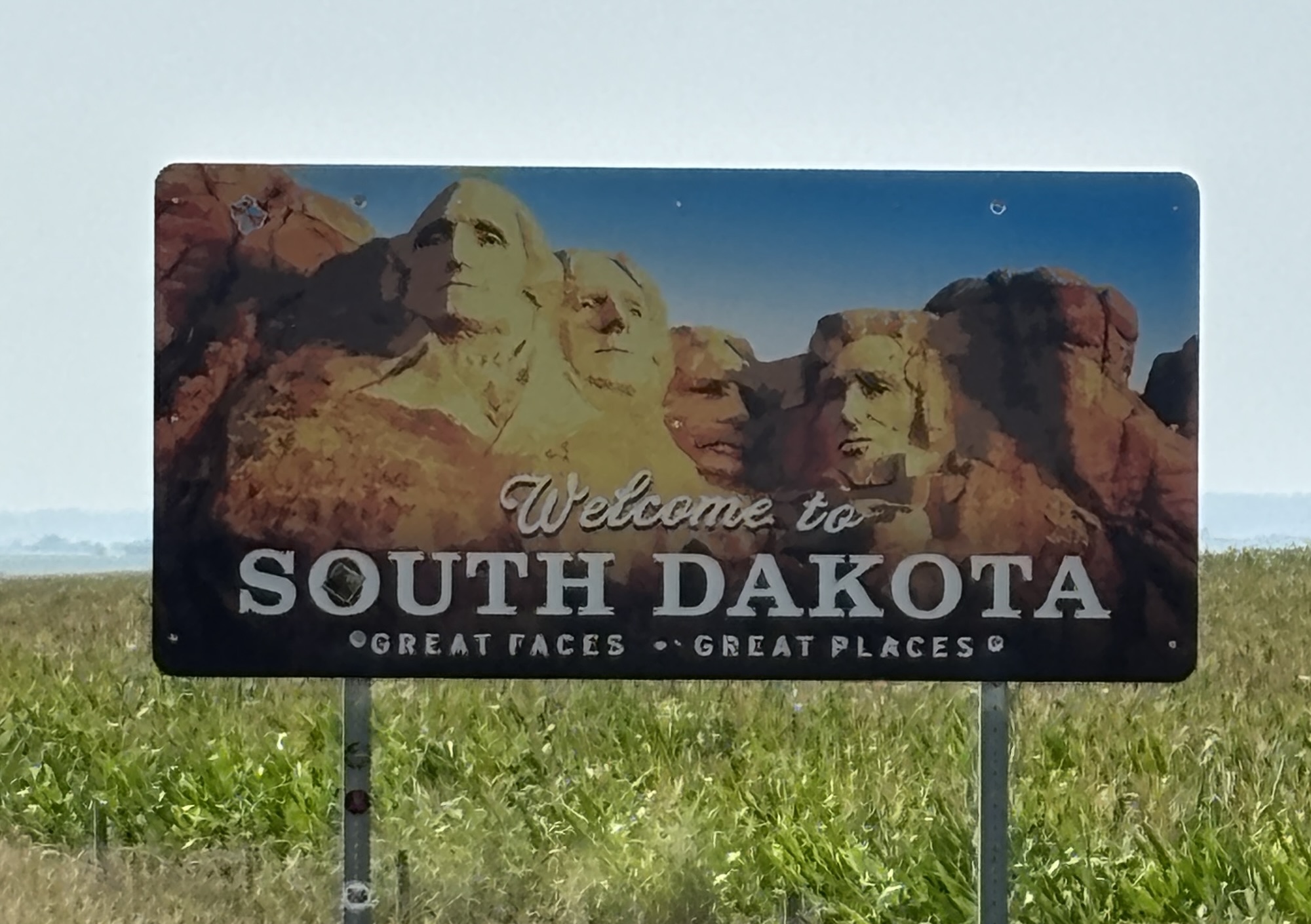
Up and at ‘em the next morning for the 200-mile drive south to Pierre, SD and another state (#45) for Gail and another state capital. Although my family lived in SD back in 1960, as far as I remember, we never visited Pierre, so it was also a first for me.
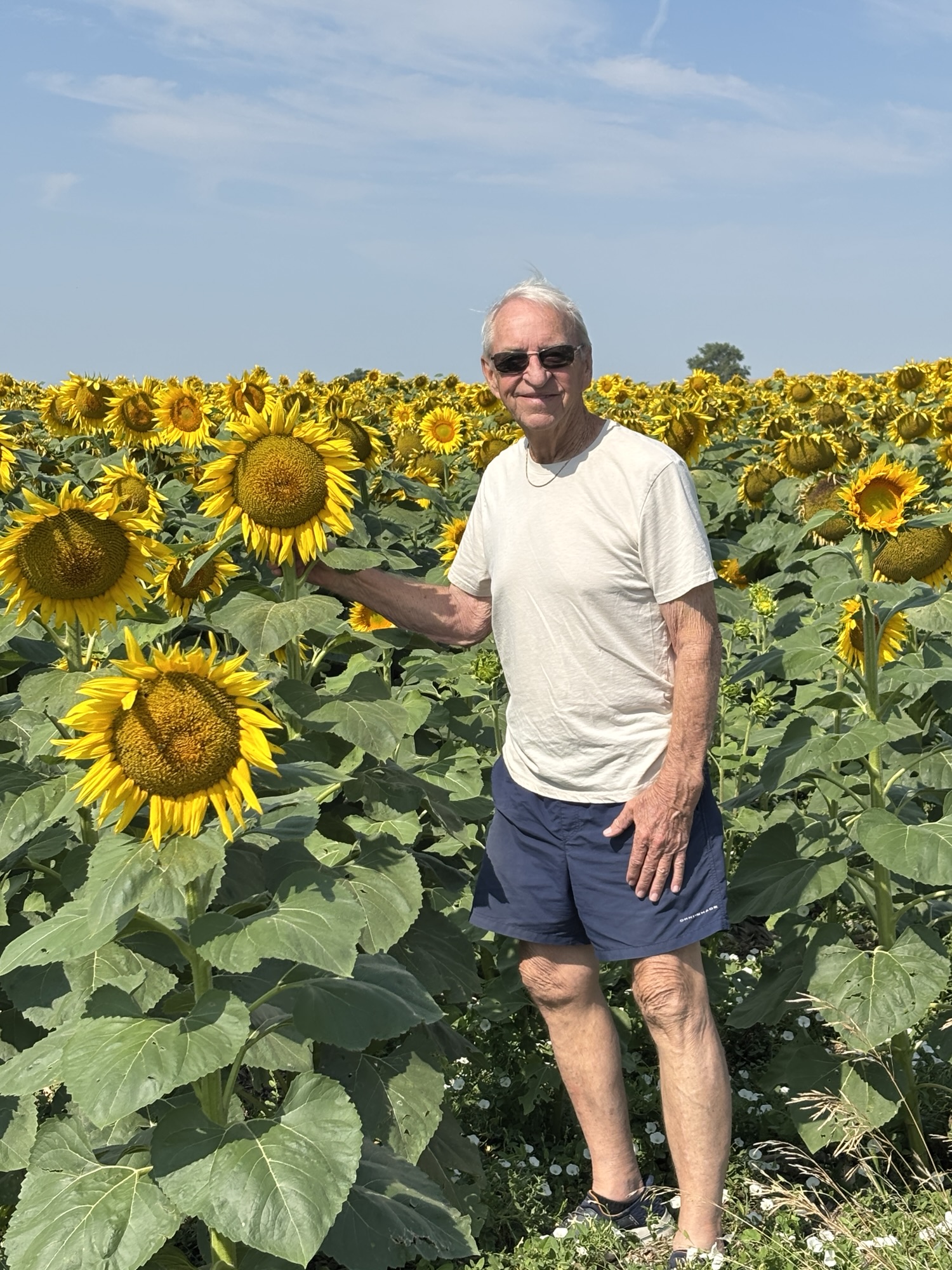
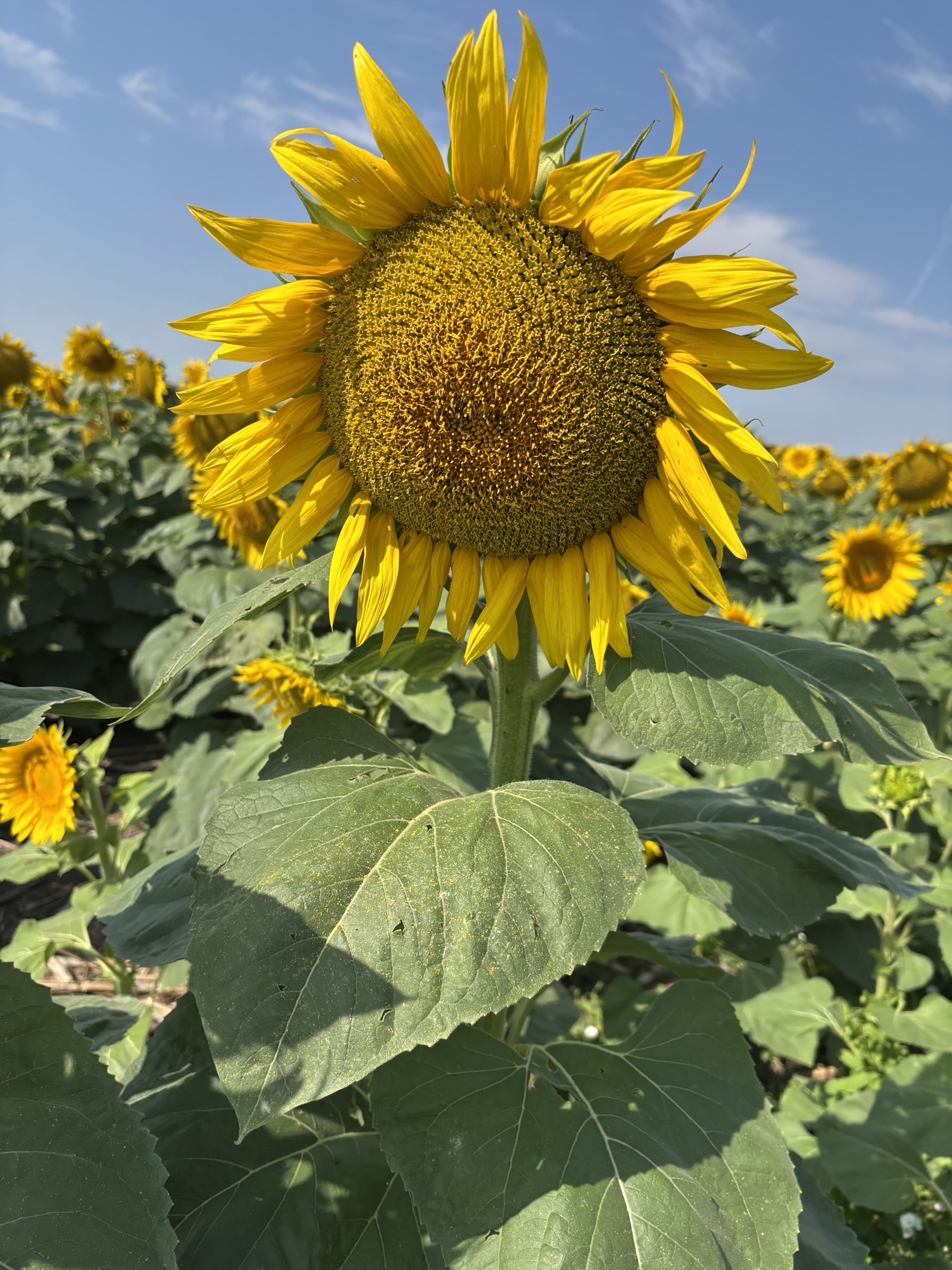
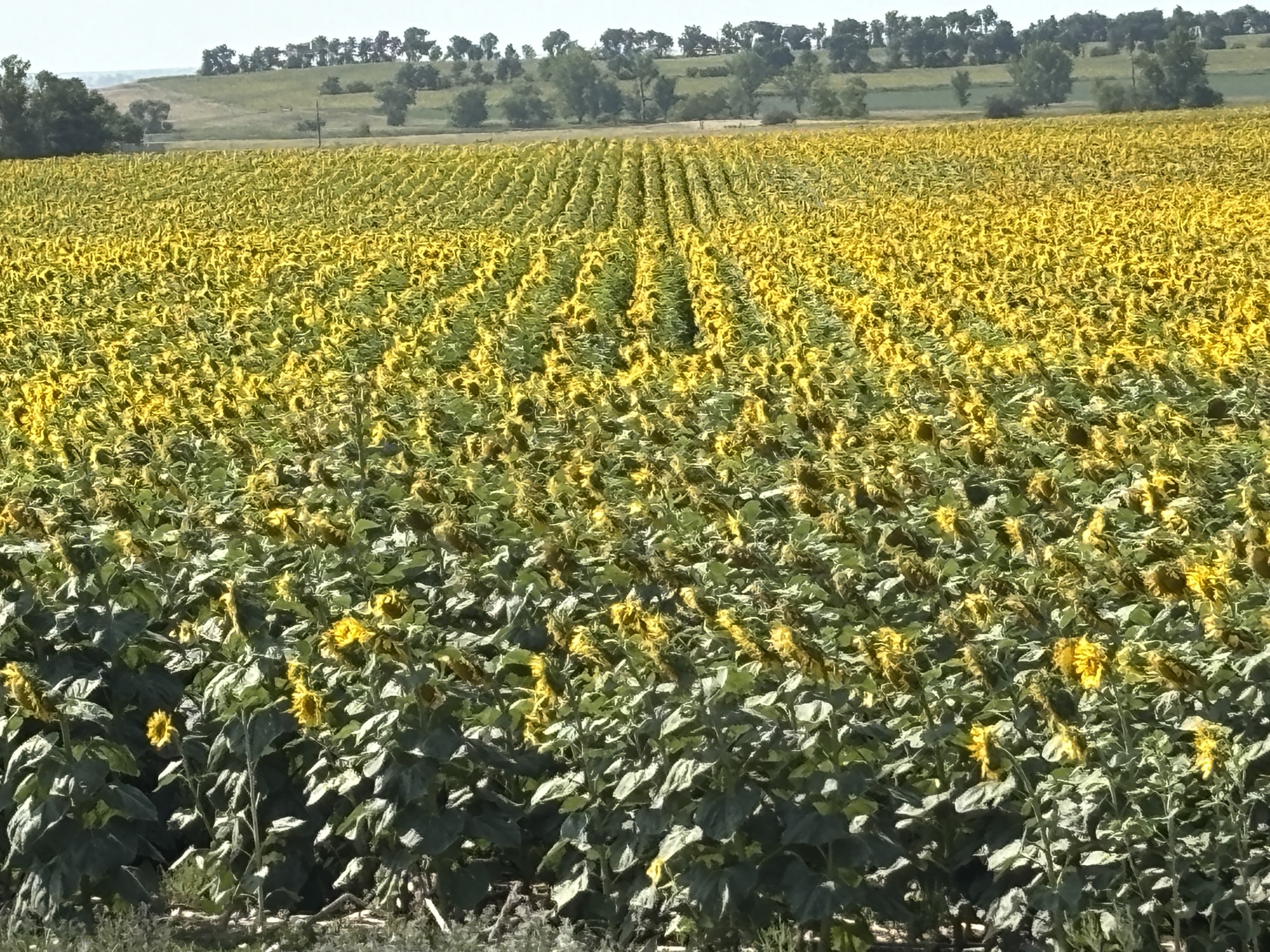
A new and surprising sight on the drive down was the beautiful Sunflower fields. Like the Canola fields, these were bright yellow and stretched to the horizon. The flowers were in the later stages of blooming and the blossoms themselves were very heavy and drooping. And I was surprised to see that some were much larger than others. Of course, there are different strains for different purposes.
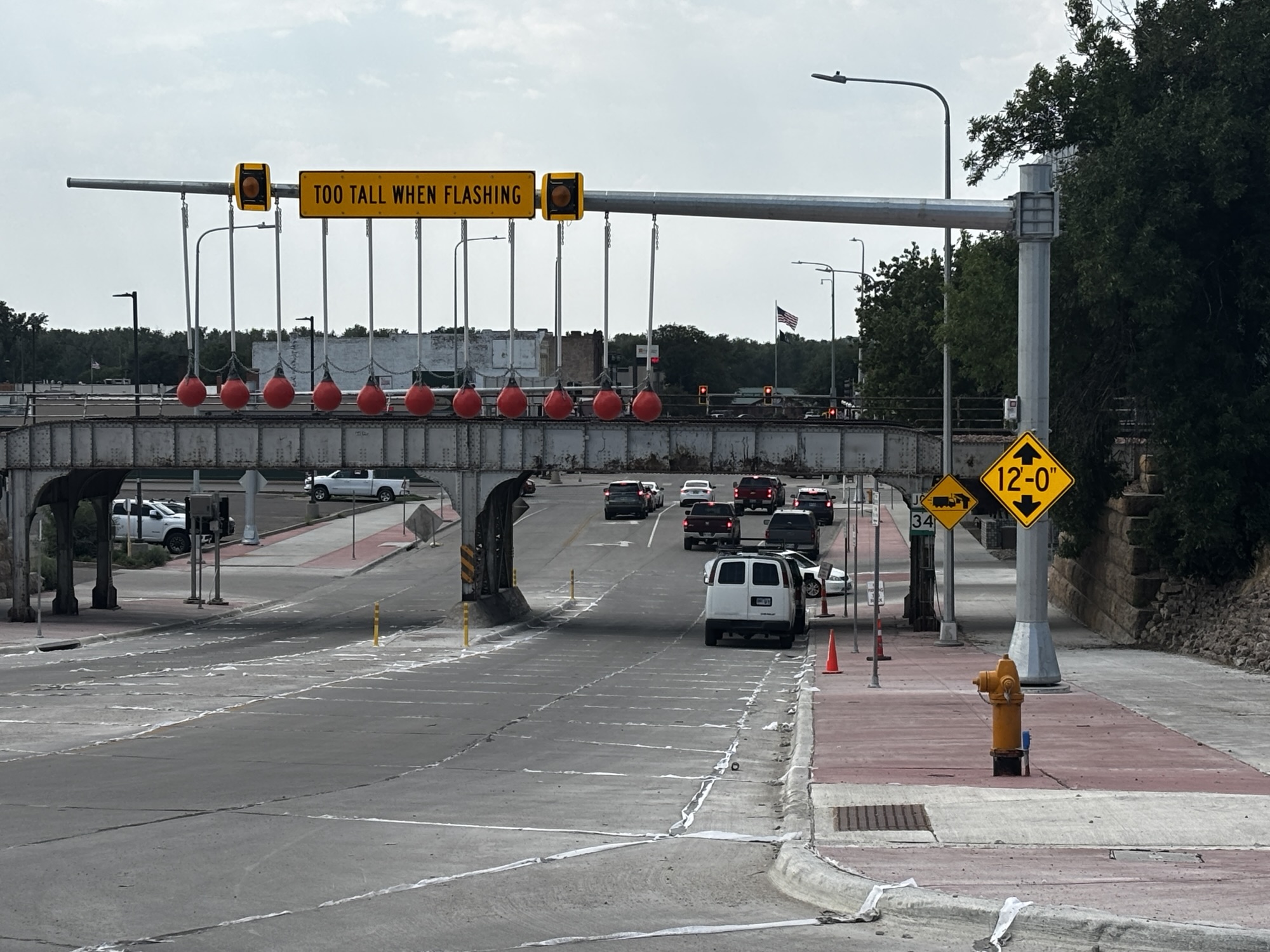
We were warned about a low bridge in the downtown area and about dirt roads that were on the normal GPS route to the RV Park. We followed the RV park host’s instructions and found our spot.
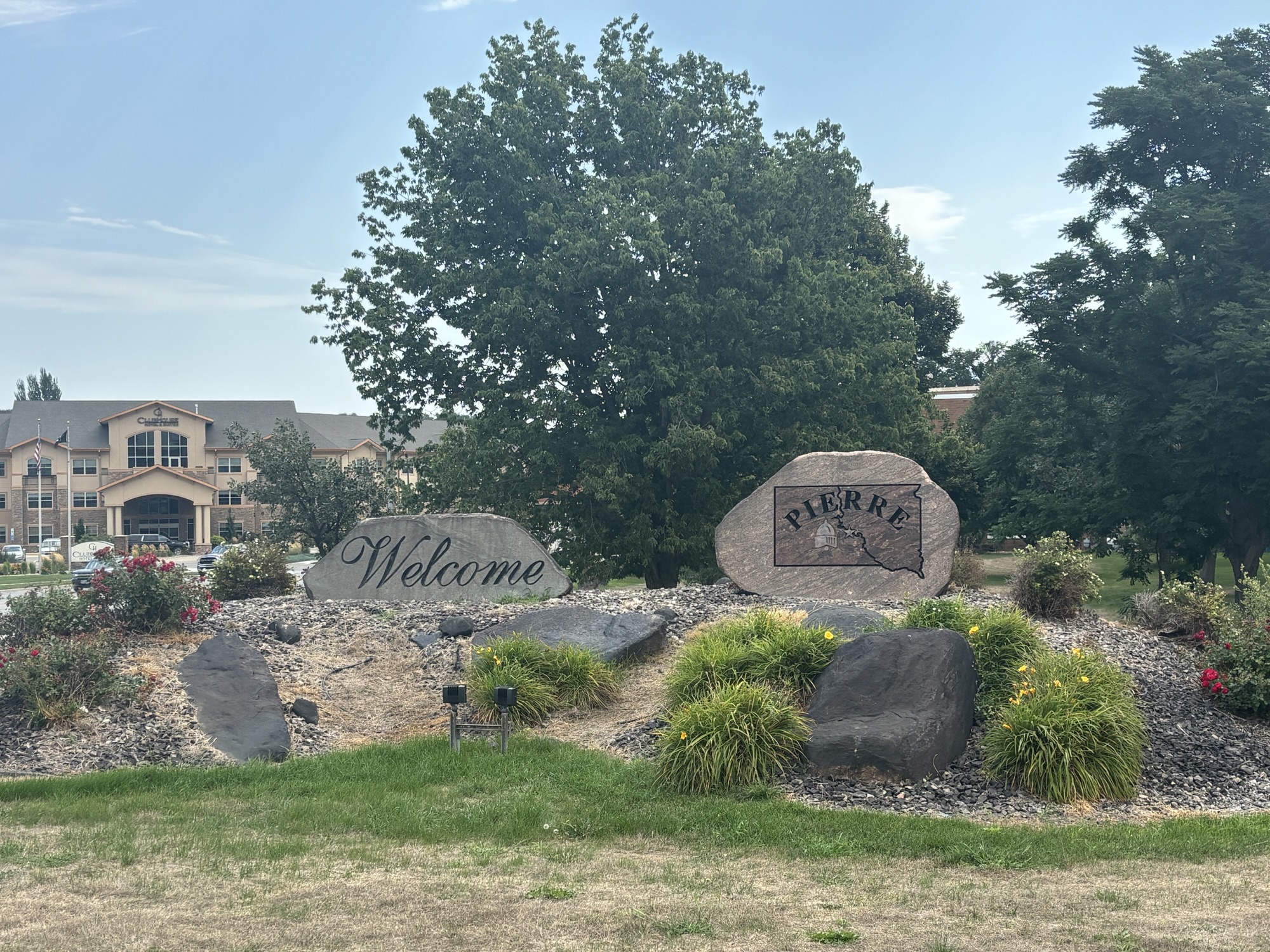
Pierre (pronounced in English not French as “Peer”) is also on the Missouri River and has the Oaha Dam controlling the flow. Pierre is on the east side and is the capital while Fort Pierre is on the west side and has more industry.
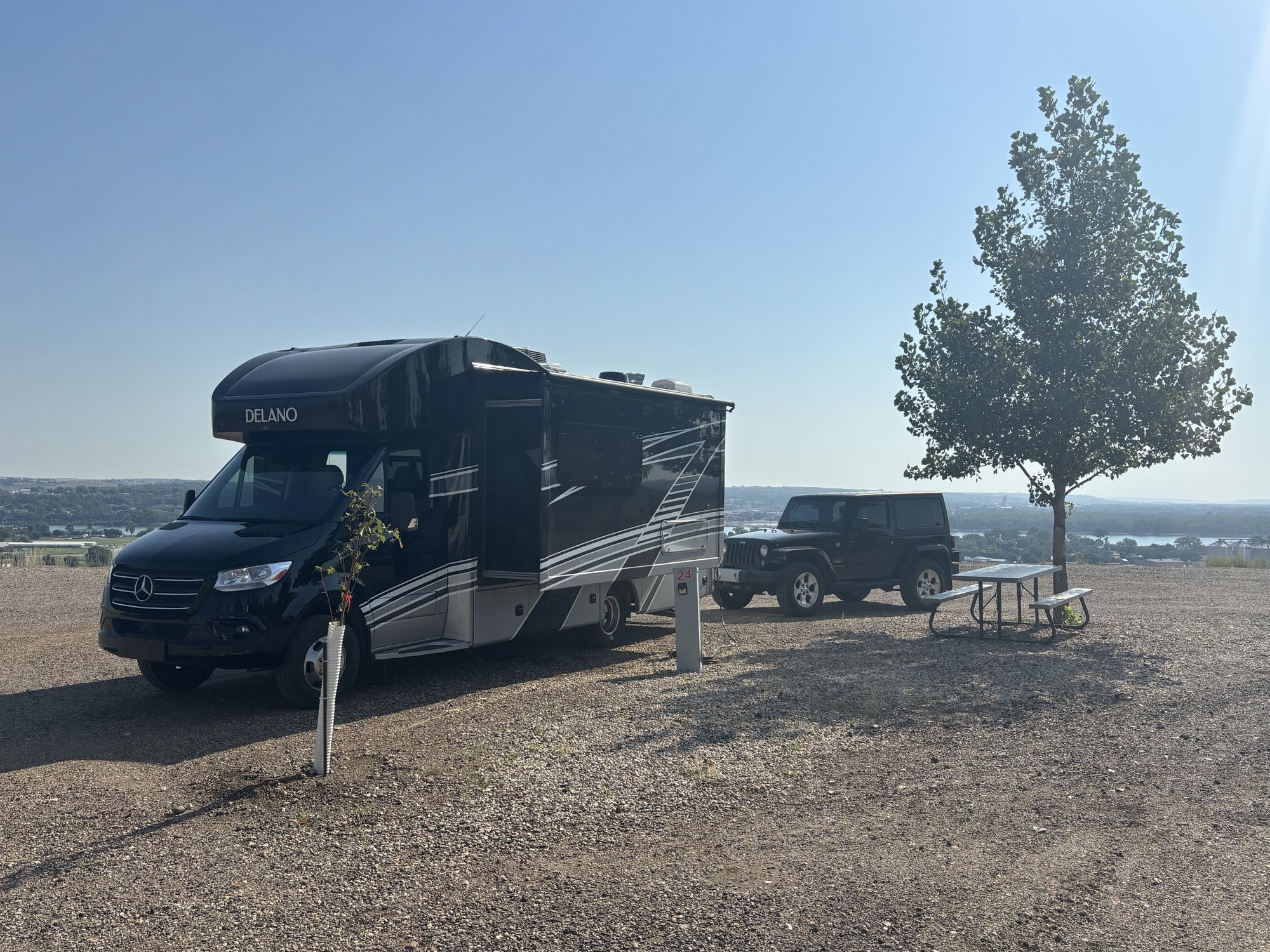
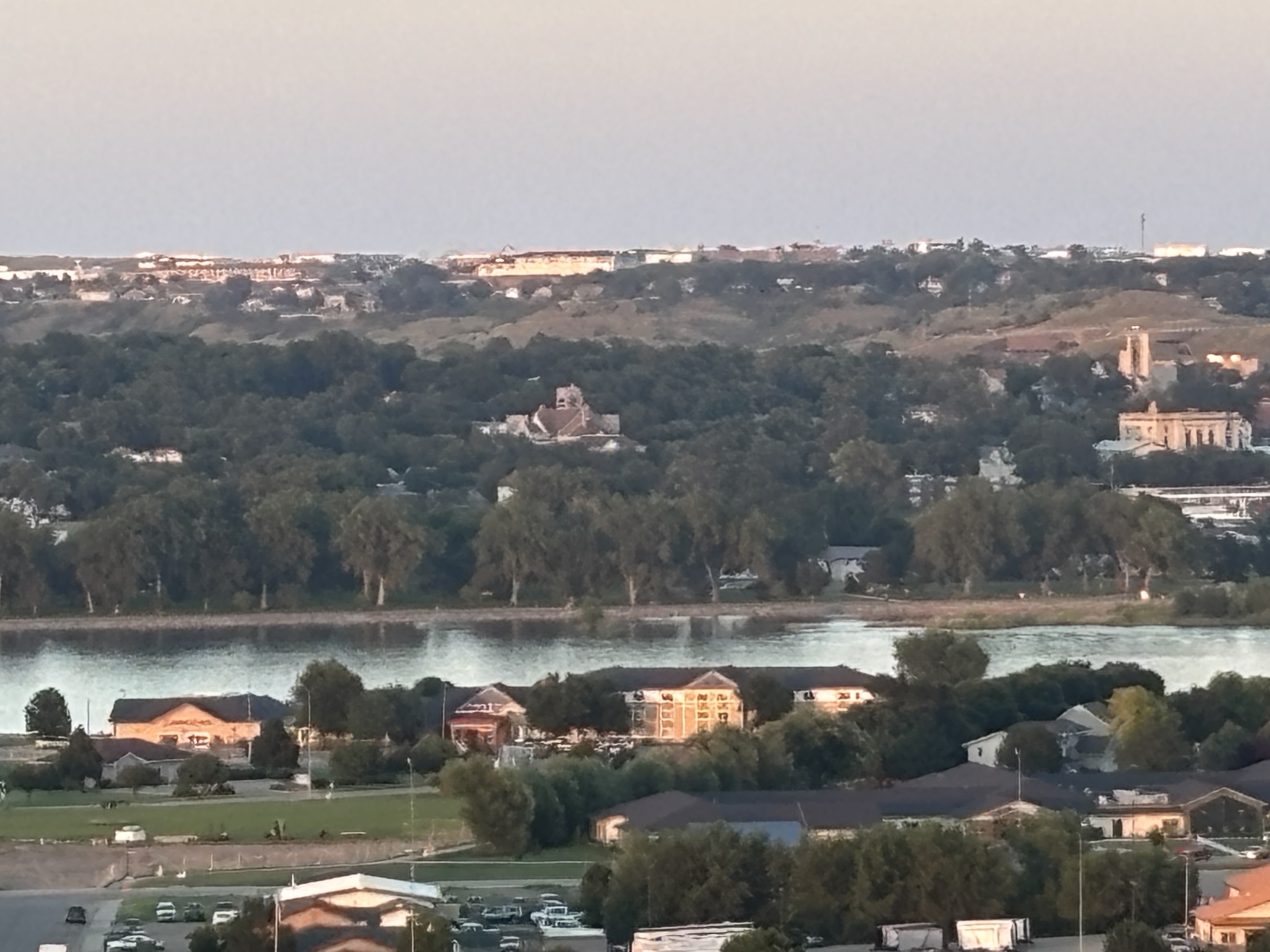
Our RV Park was in Fort Pierre overlooking the river at the River View Campground and we had a pad directly on end of the row with a view of the river. Get the picture!! The camp is privately owned, and Lila gave us a lot of good information (as well as free cookies and candy). We had one day to explore so we relaxed after arriving and got everything planned out.
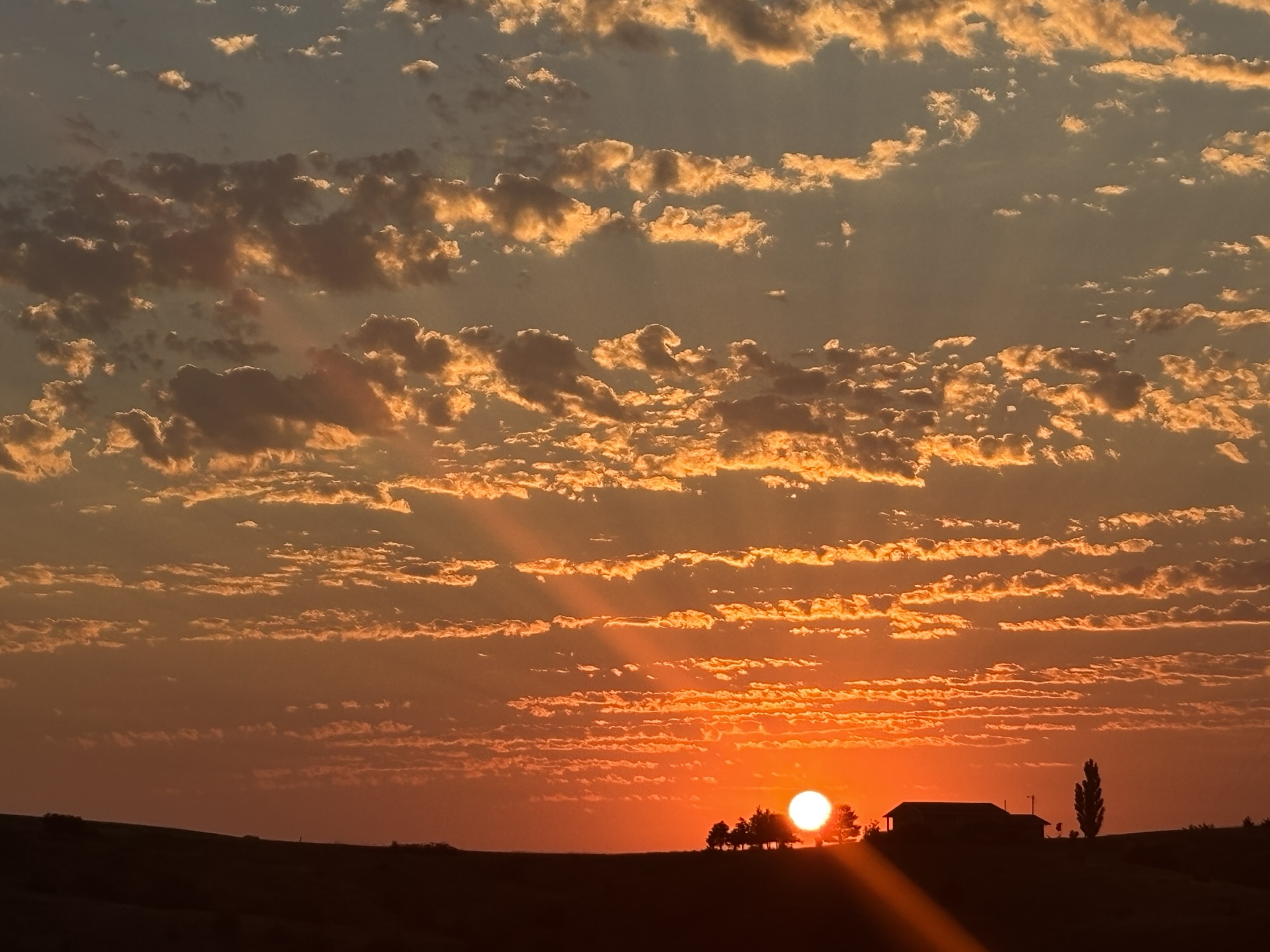
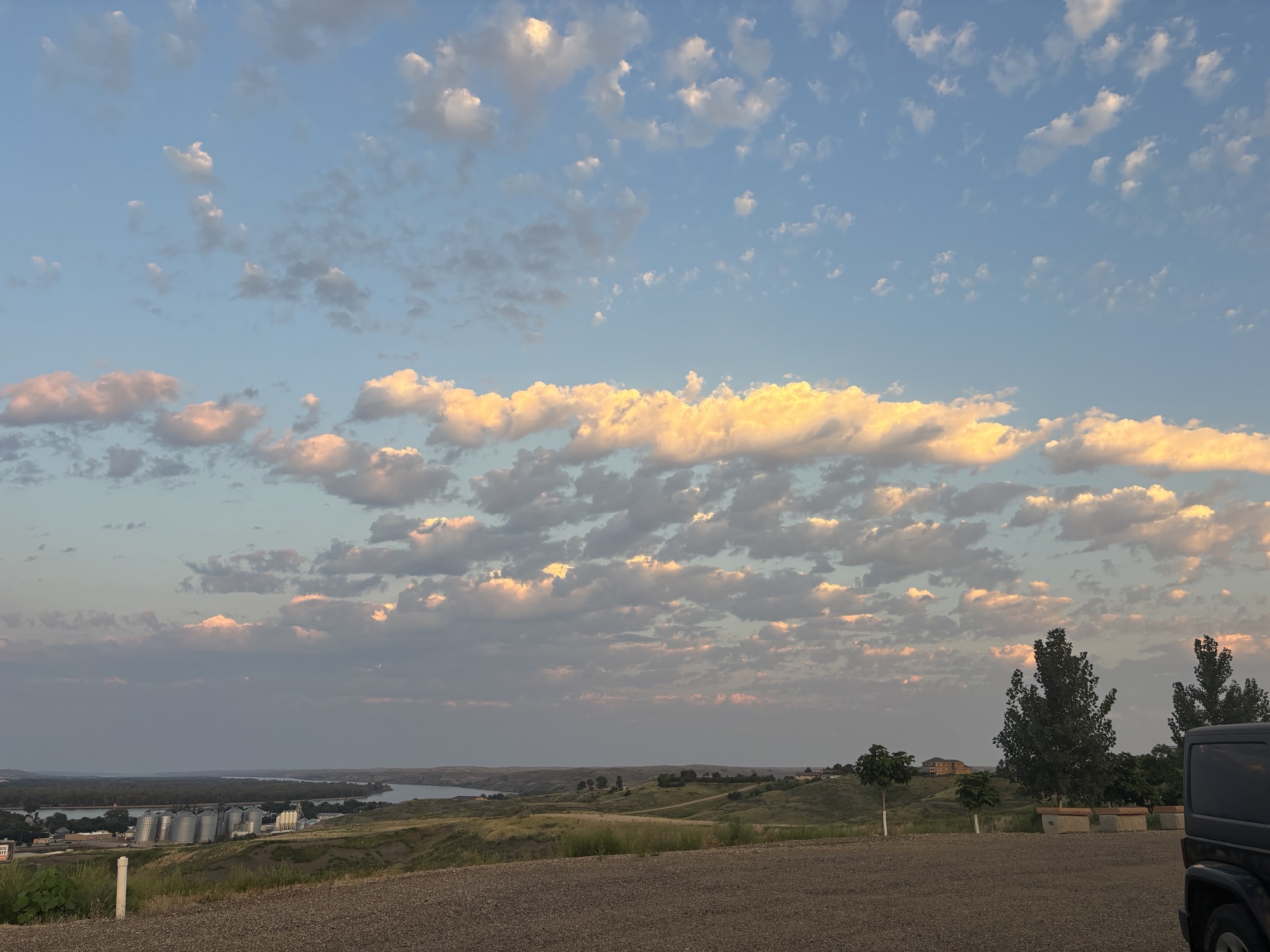
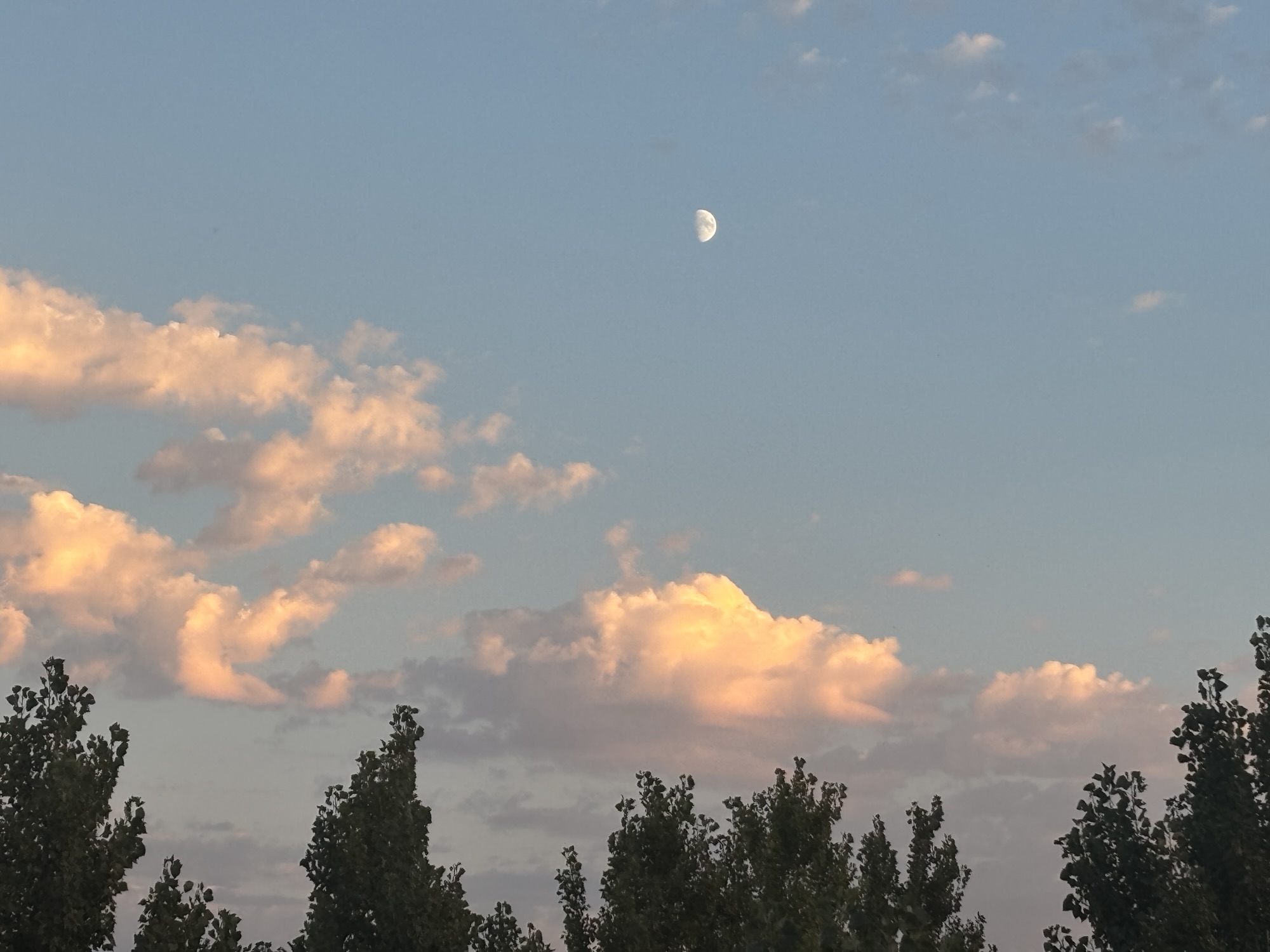
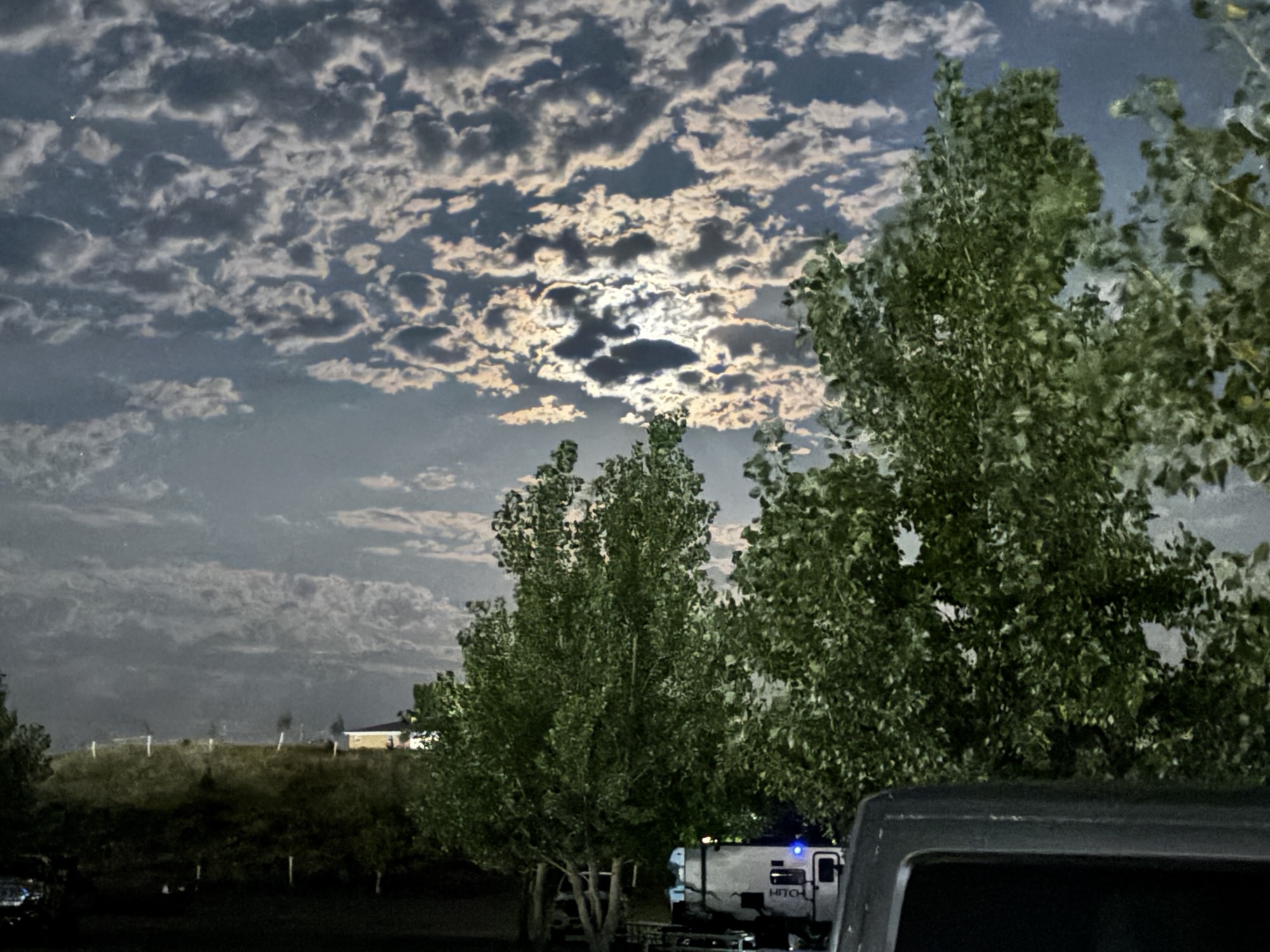
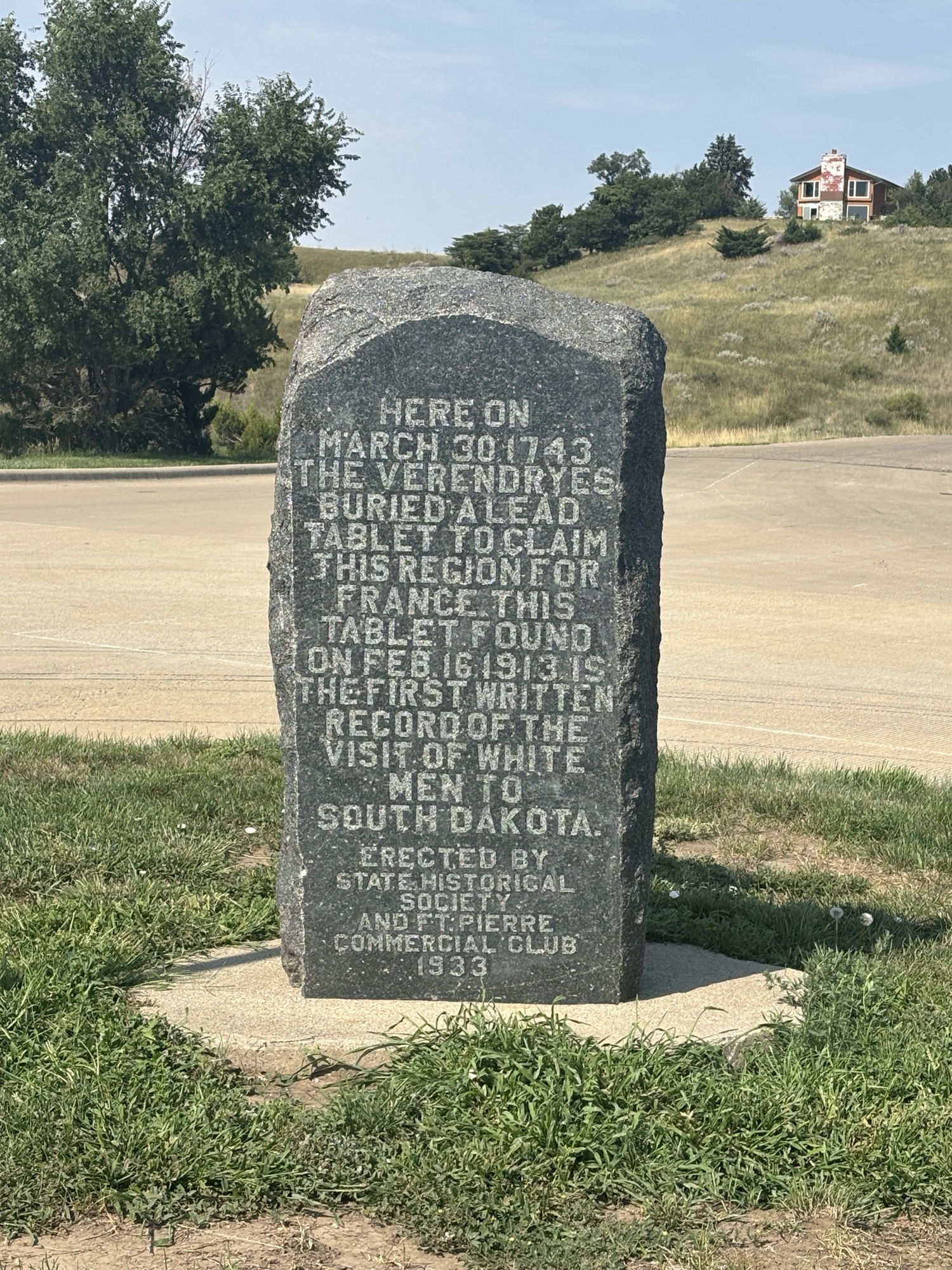
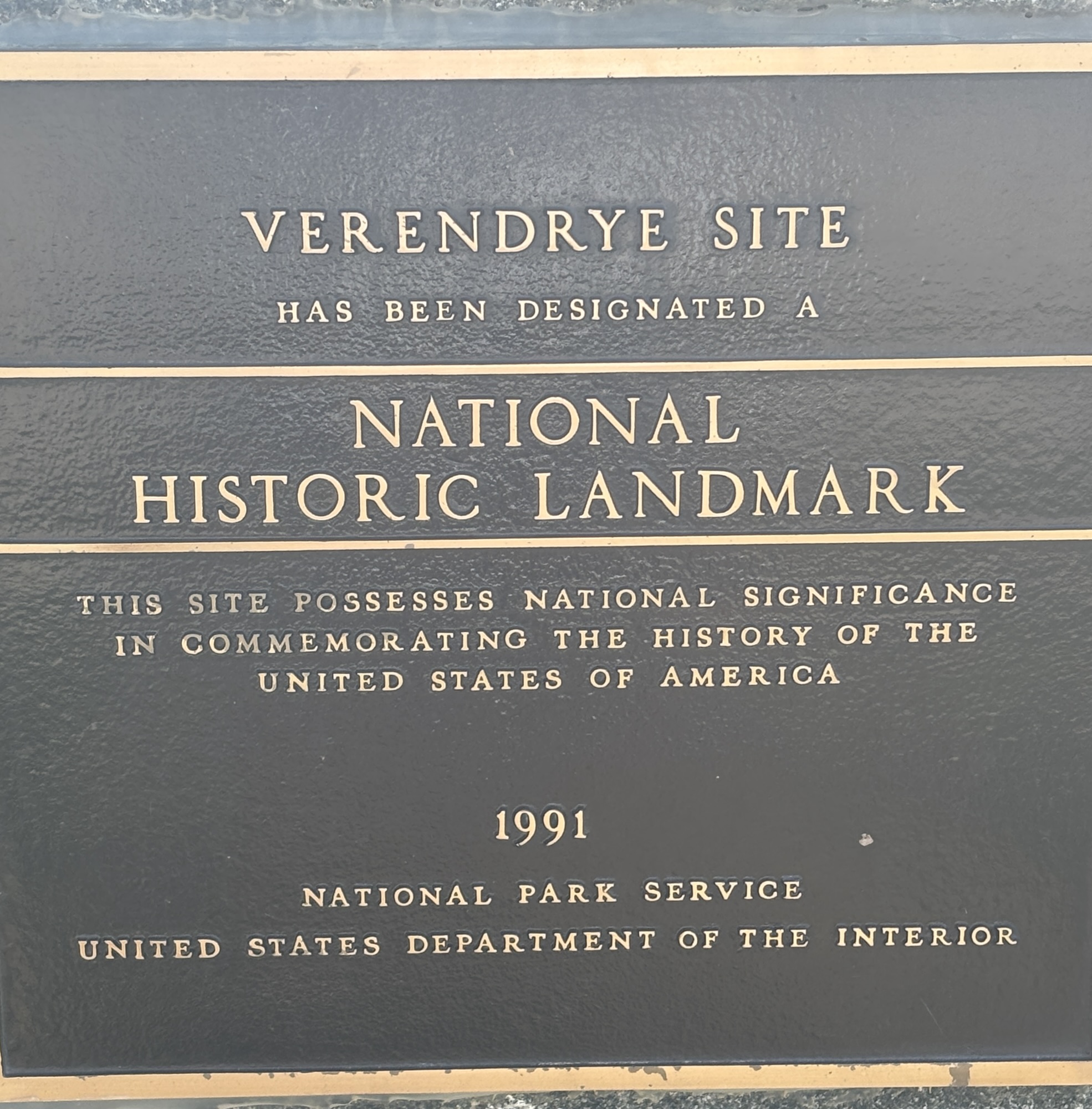
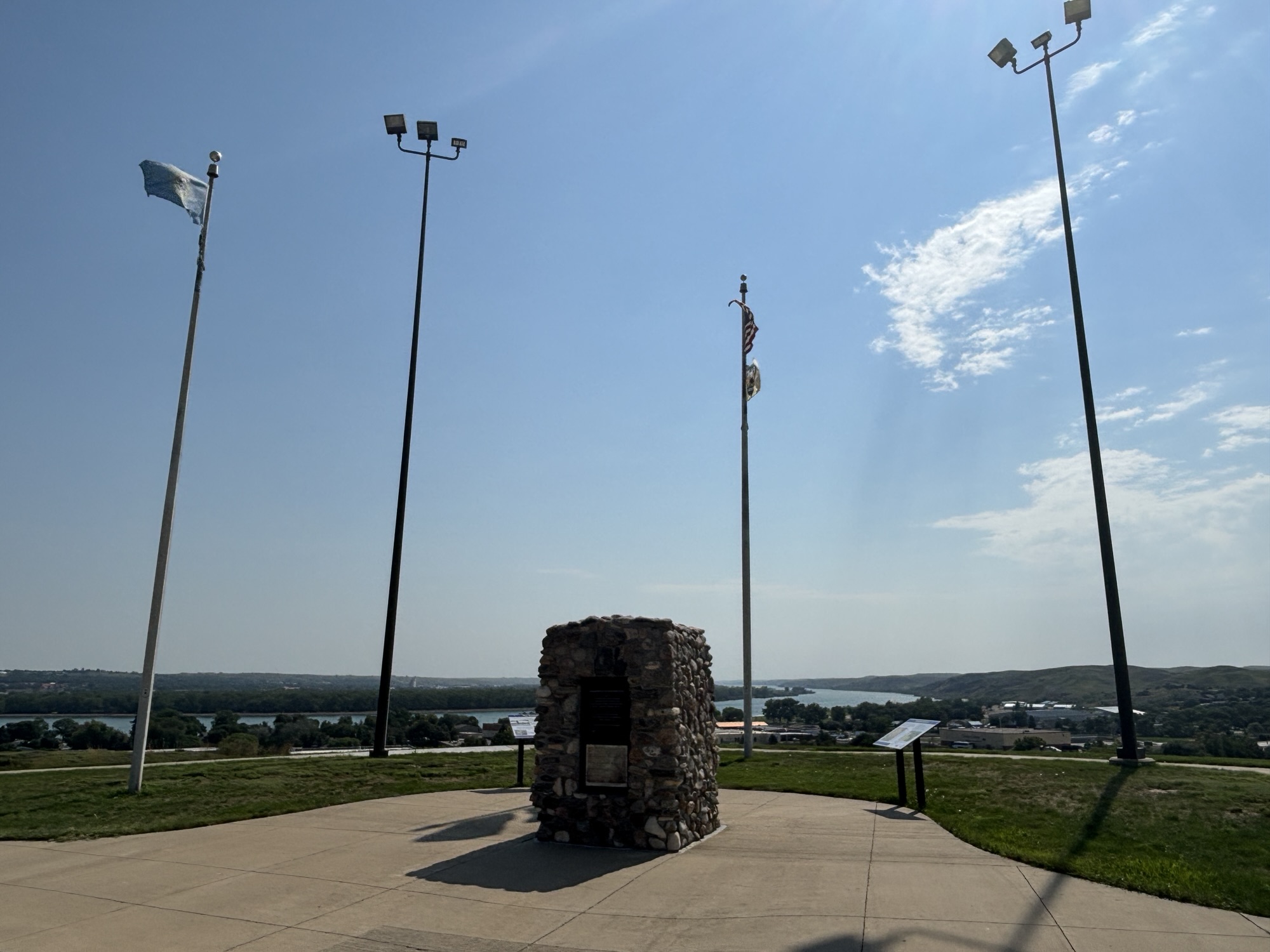
Our first stop was at the Verendrye site. What is that? Well, it turns out that French explorers from Canada explored the area and claimed it for France in 1743. They buried a lead tablet that was dated and with the text about the claim. It was discovered in 1913 on the hillside by some kids digging in the area. The original plate is in a museum, and it is the only one that has been found.
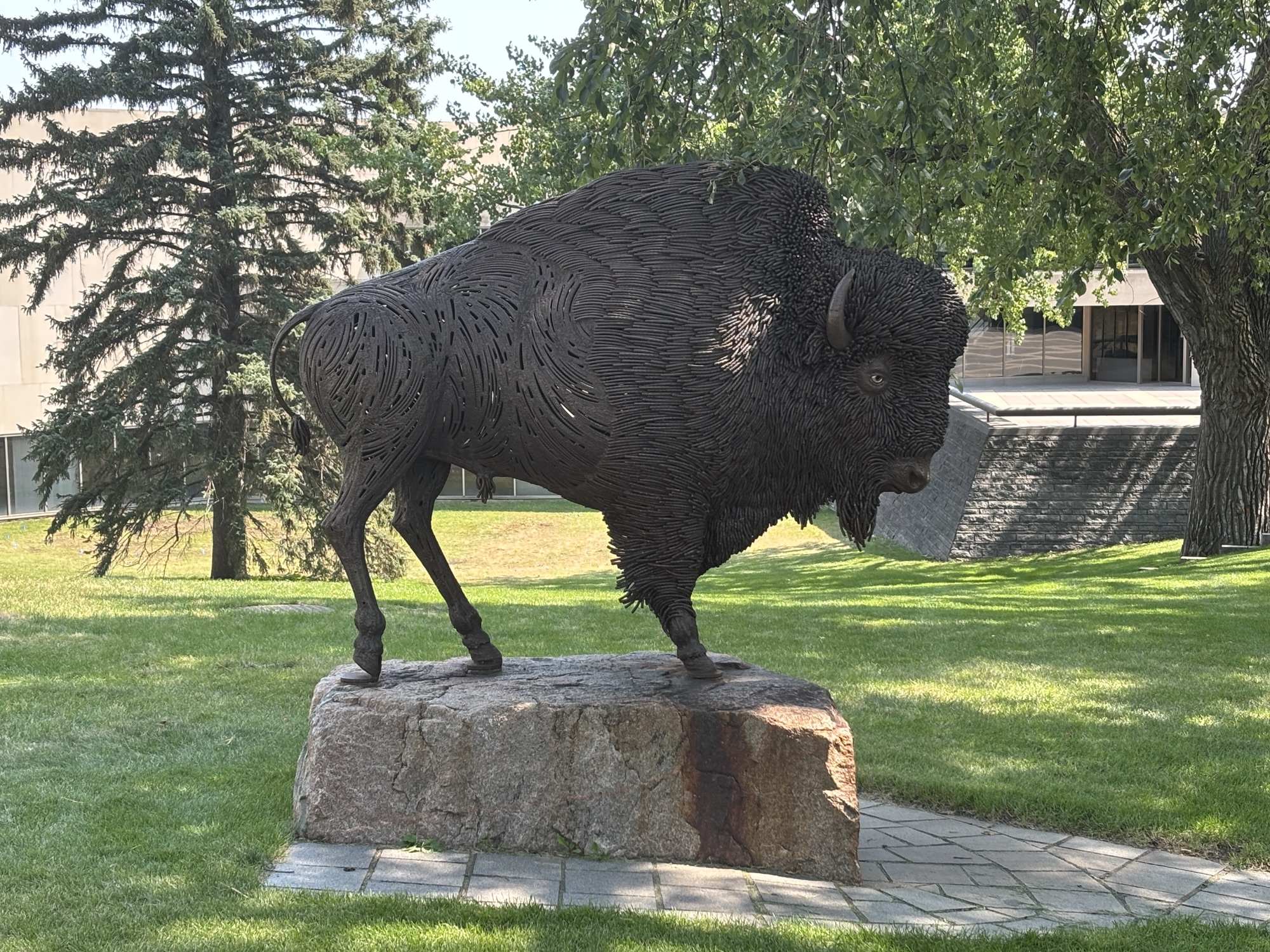
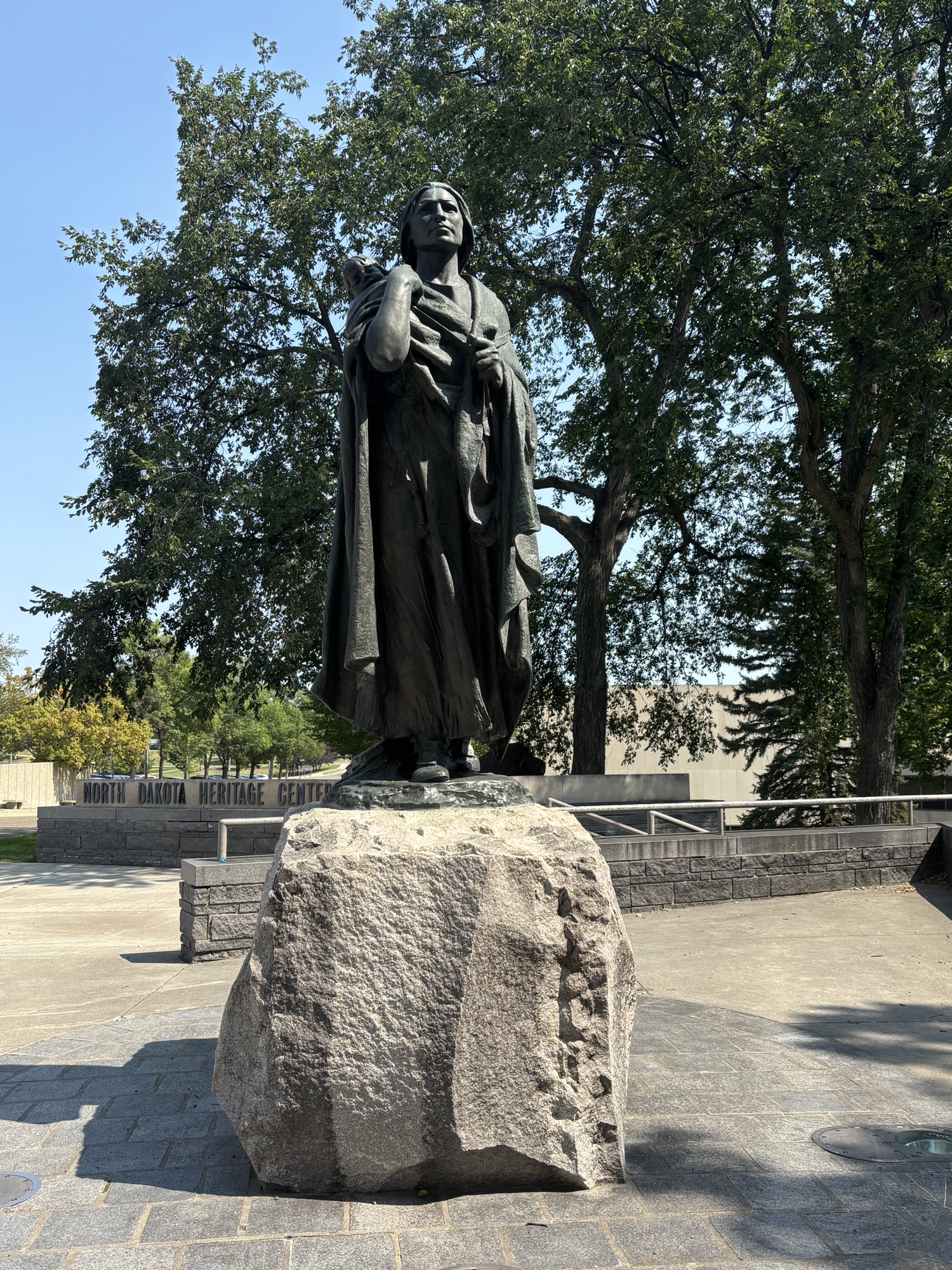
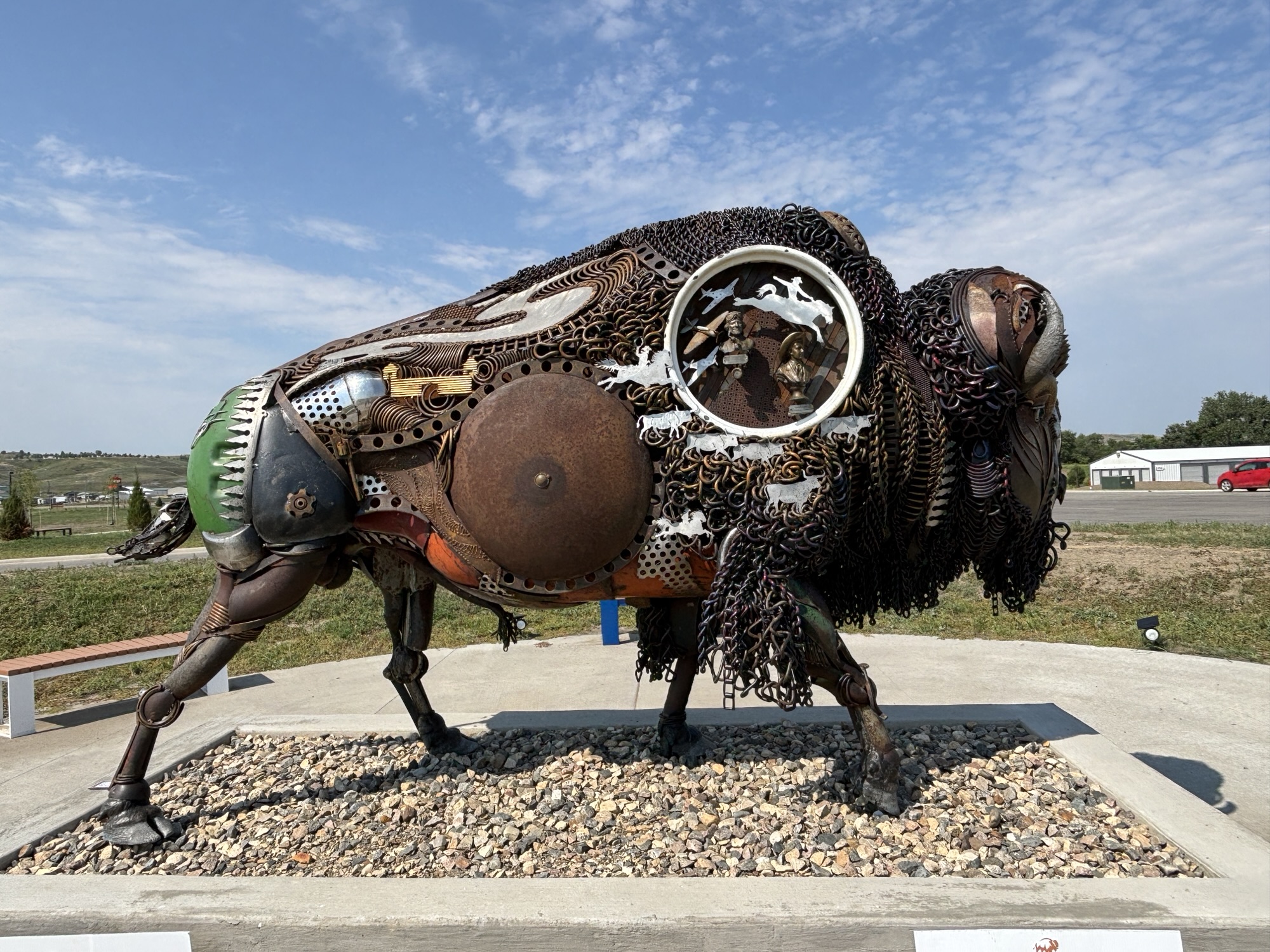
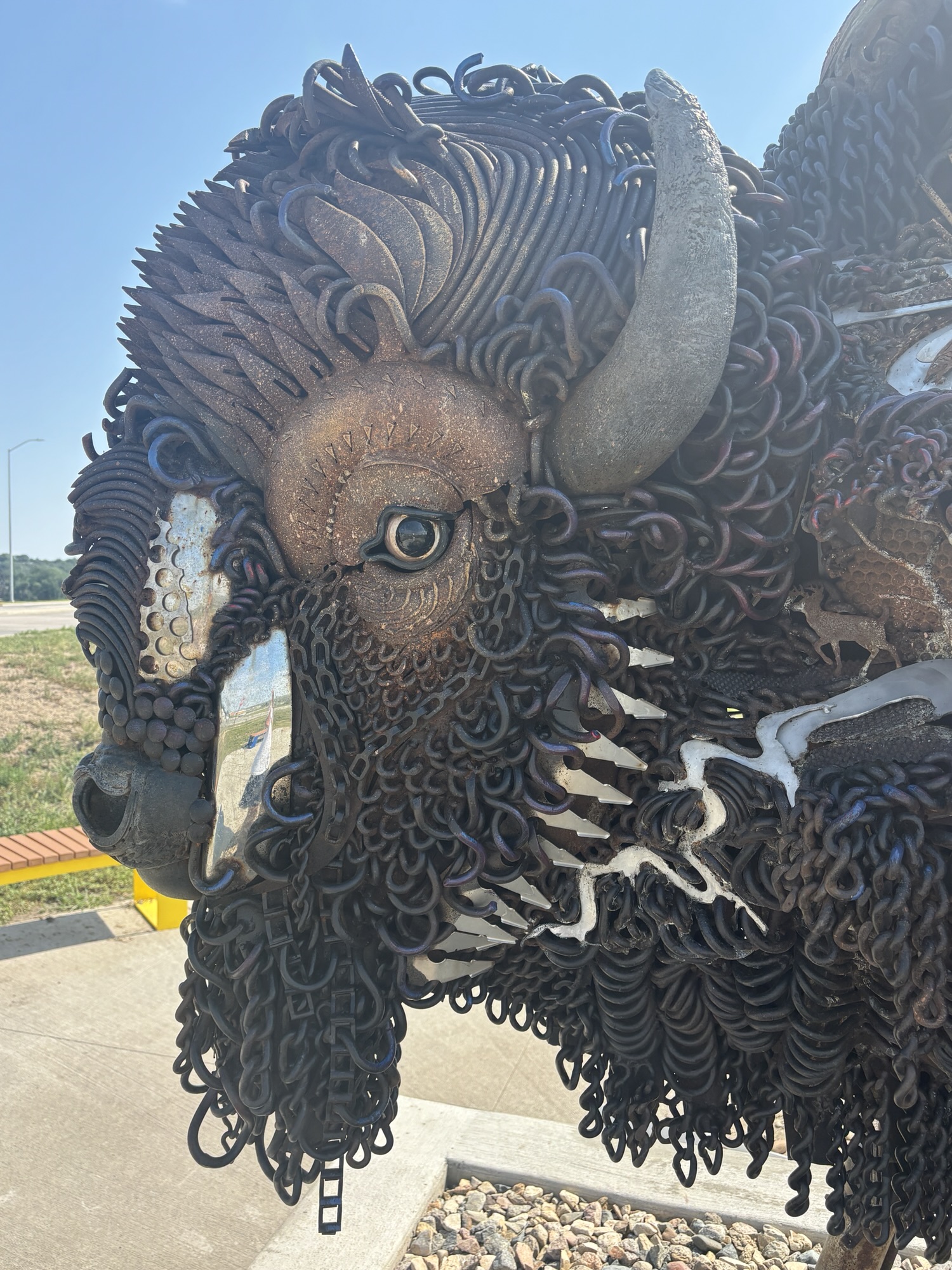
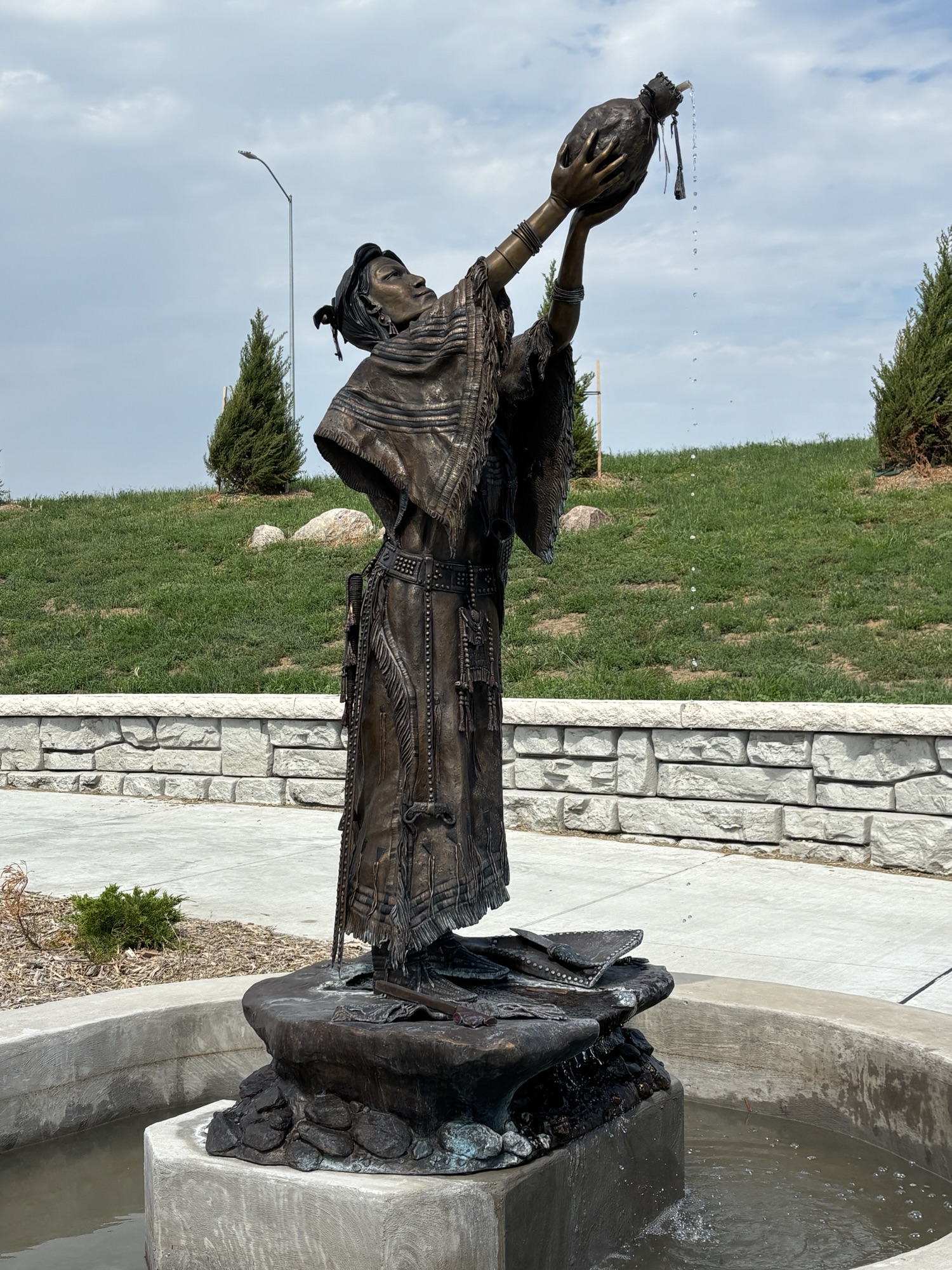
The next stop was the riverside park area in Fort Pierre, just before you cross the river to Pierre. There is a new buffalo statue by John Lopez. Very interesting construction using random items. In researching other locations, we have seen that his statues are prominently displayed throughout the region. Additionally, there is also Water Carrying Woman by Matthew Lanz depicting a Lakota woman holding a jug of water.
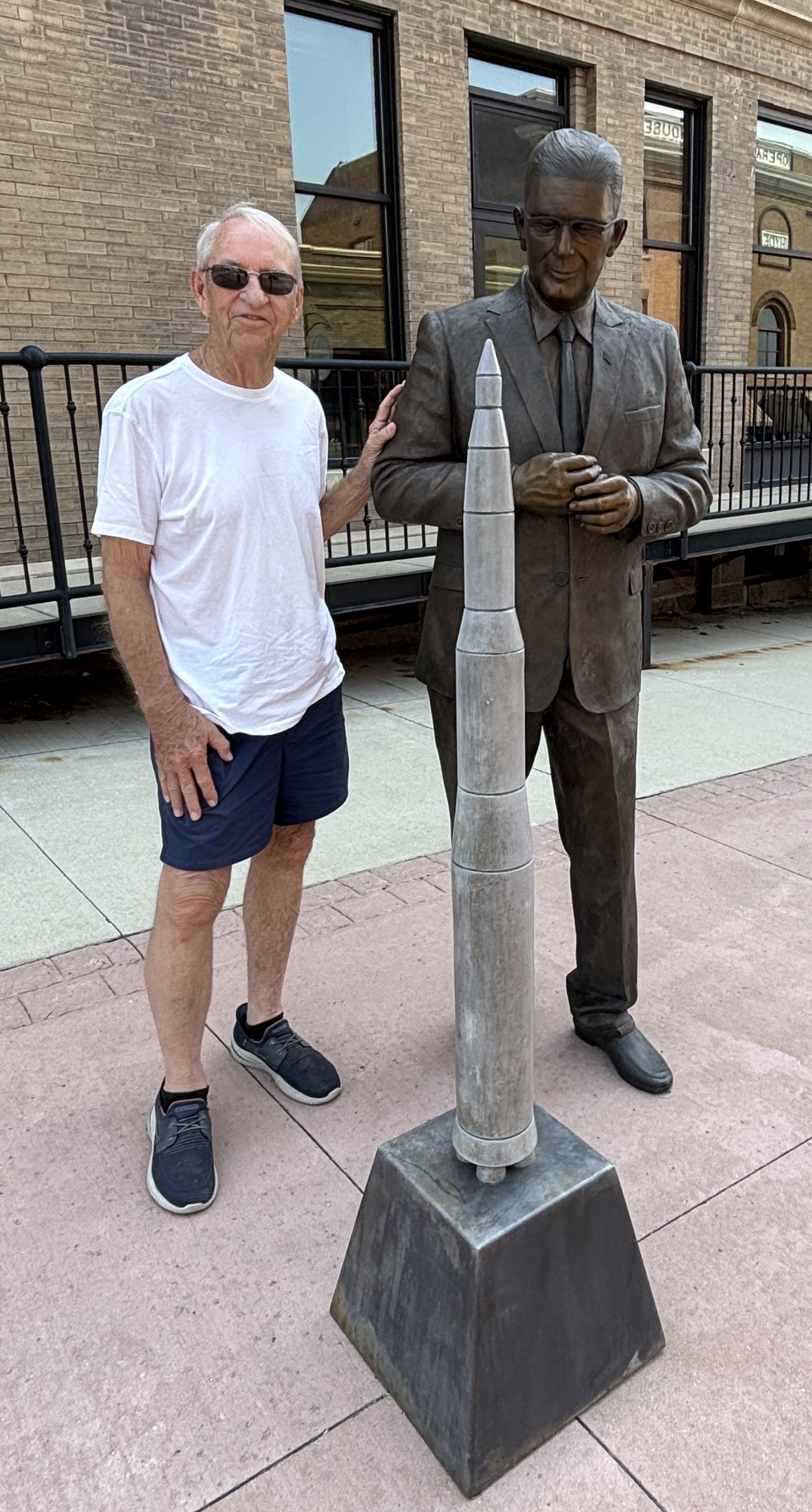
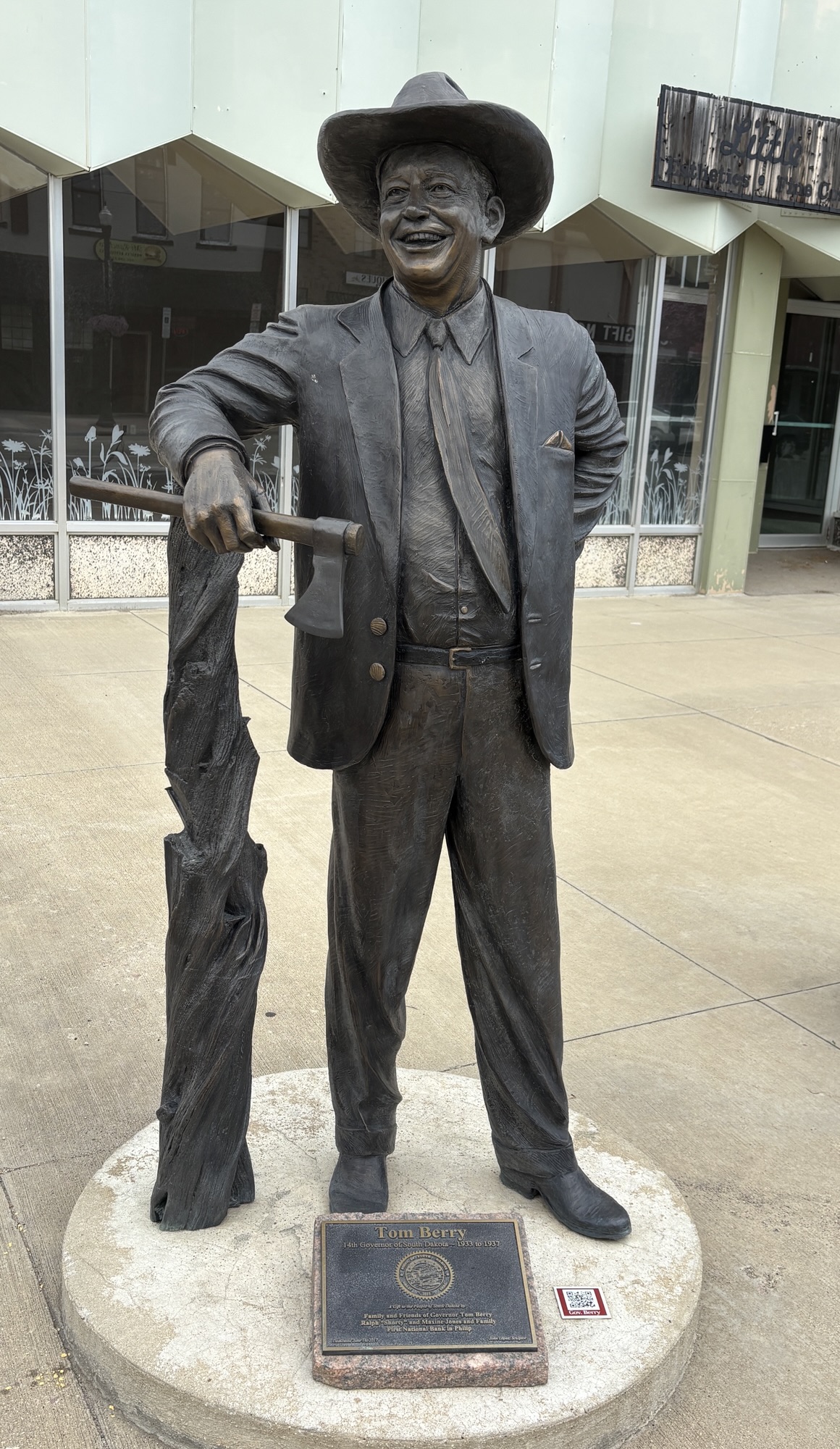
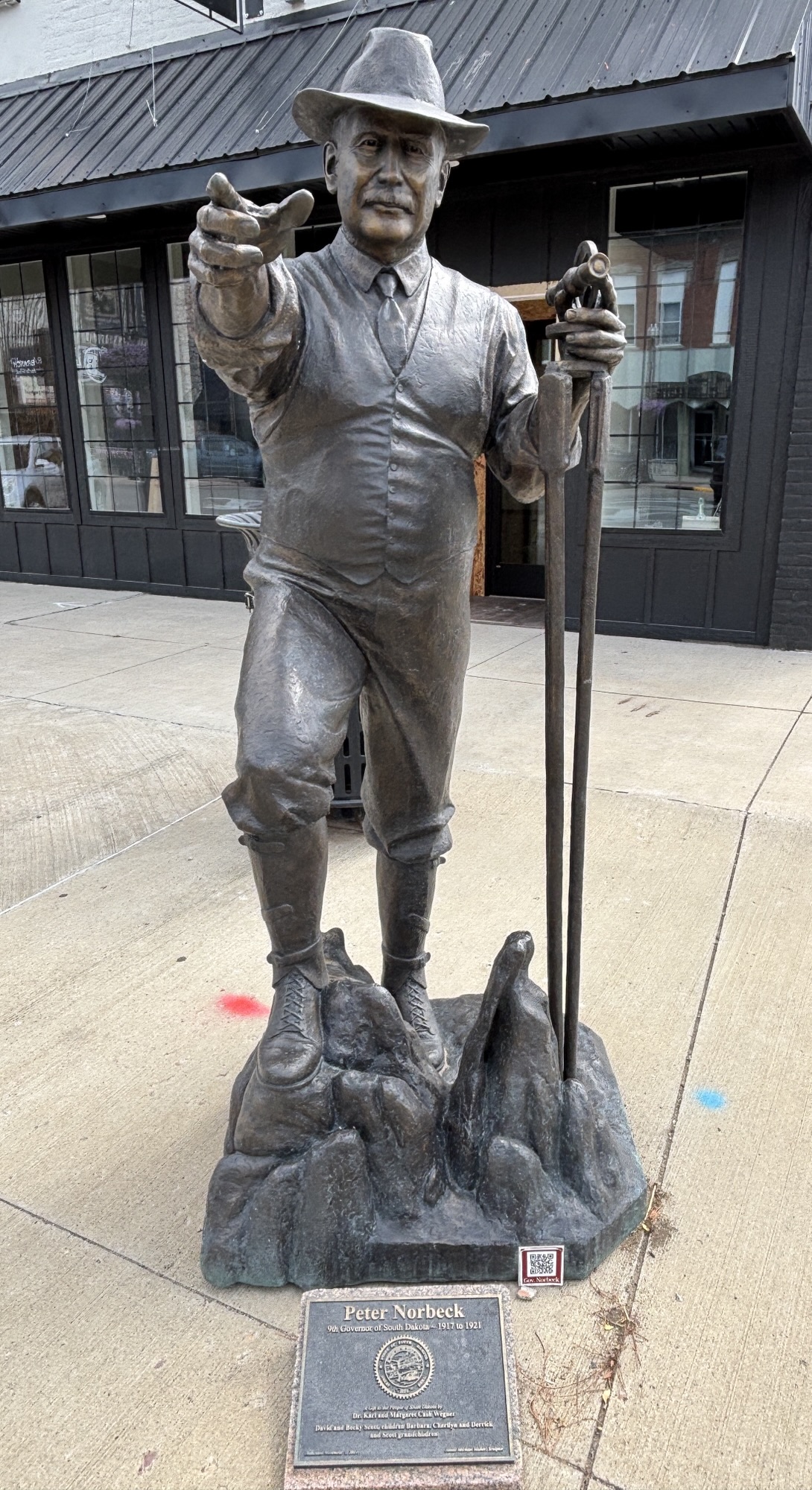
We detoured through the old downtown area on the way to the capital. We were looking for statues of the South Dakota governors. They are scattered around the town. David took his with the governor that was in office when he lived in SD. We also were looking for the low railroad bridge that we had to detour around to get to the RV park. After a quick walk around the old downtown, we finally headed to the capitol.
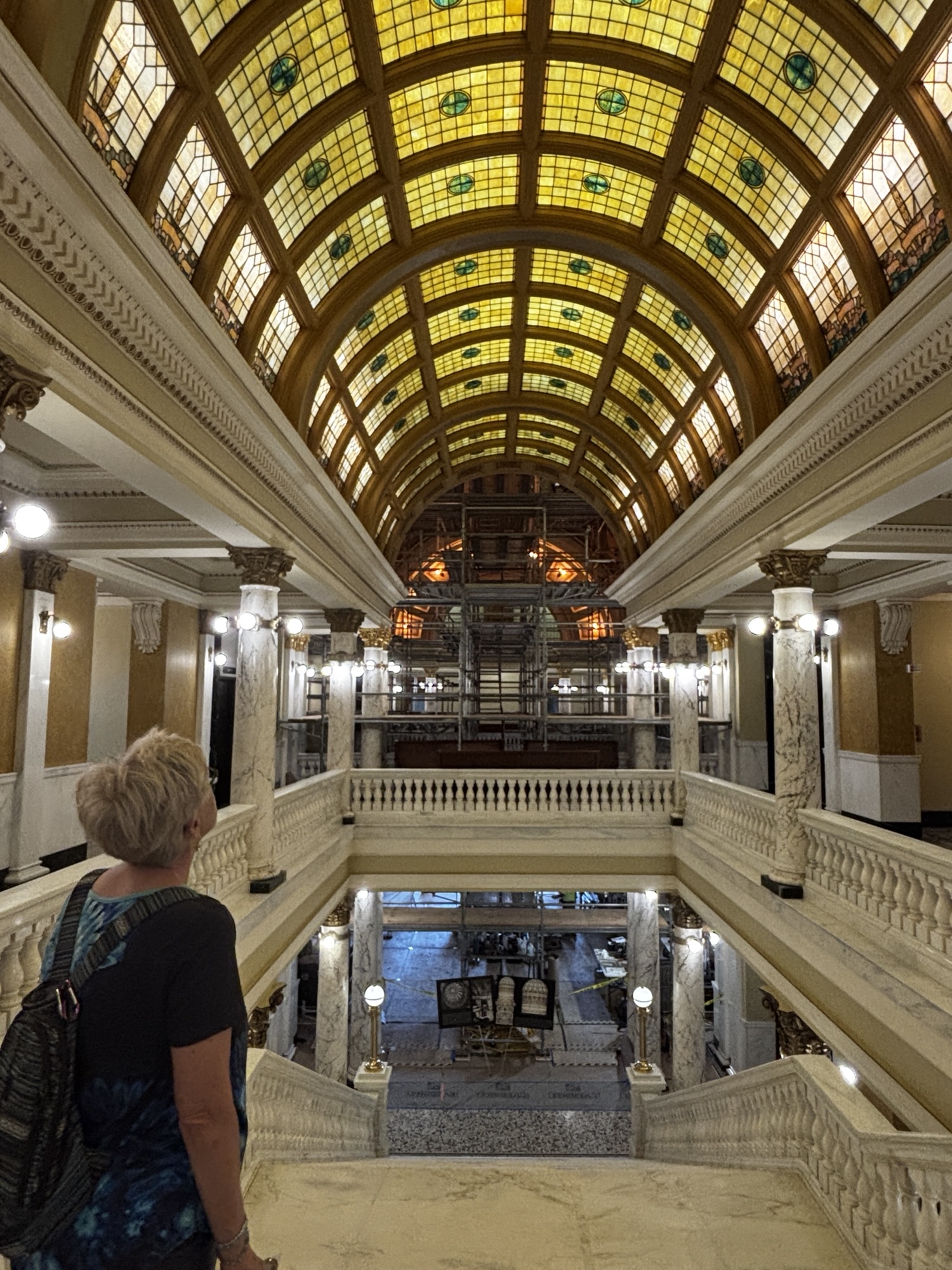
The capitol is a typical style with a raised rotunda. We could see it lit up at night from our RV site on the hill over the river. But when we entered the building, there was a major repair project in progress and scaffolding all the way up. We could not see anything. So instead, we browsed around the big rooms for the senate and representatives. There is a total of 105 members in both rooms and go by that name, The One Hundred and Five, as a group.
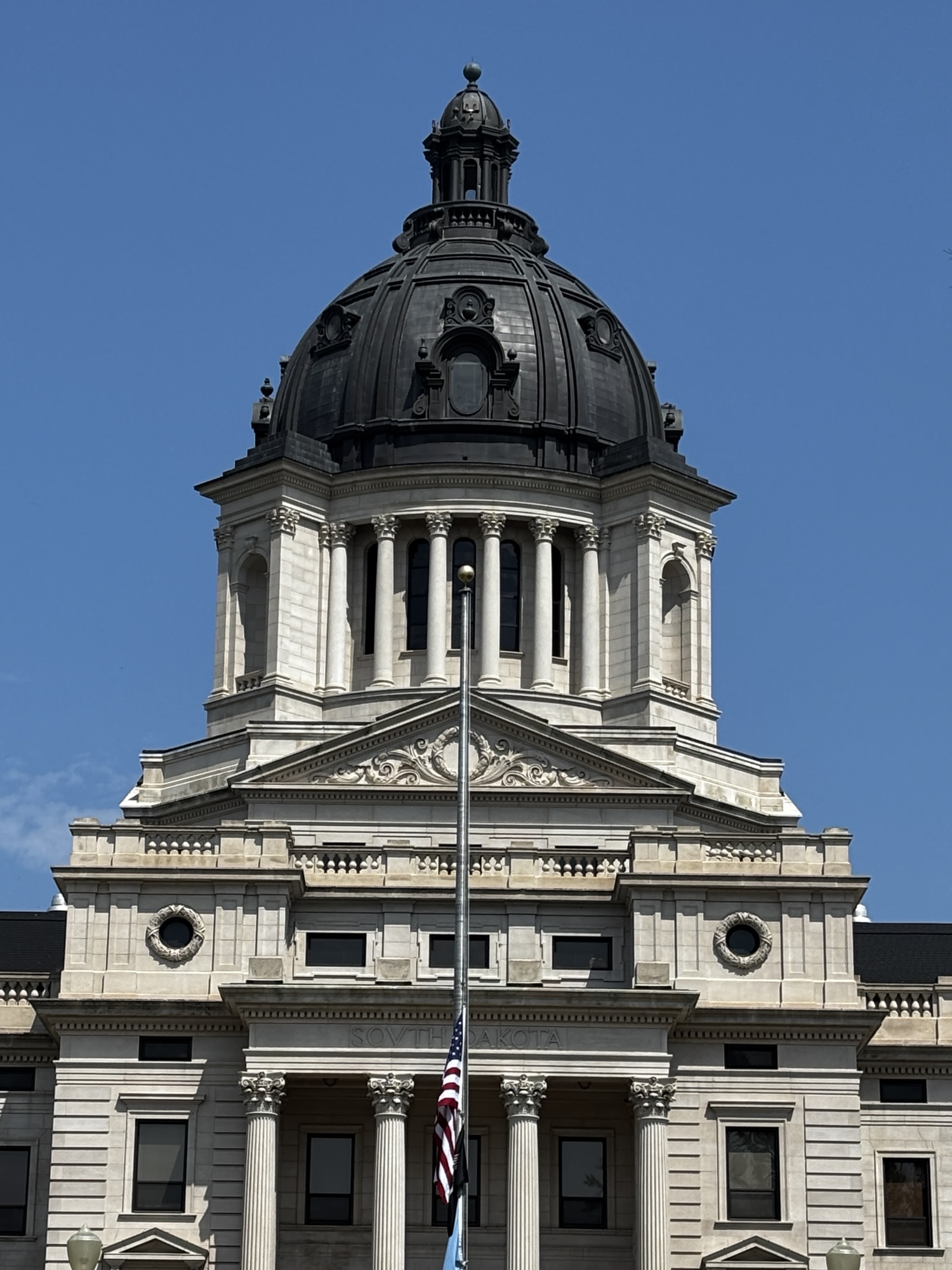
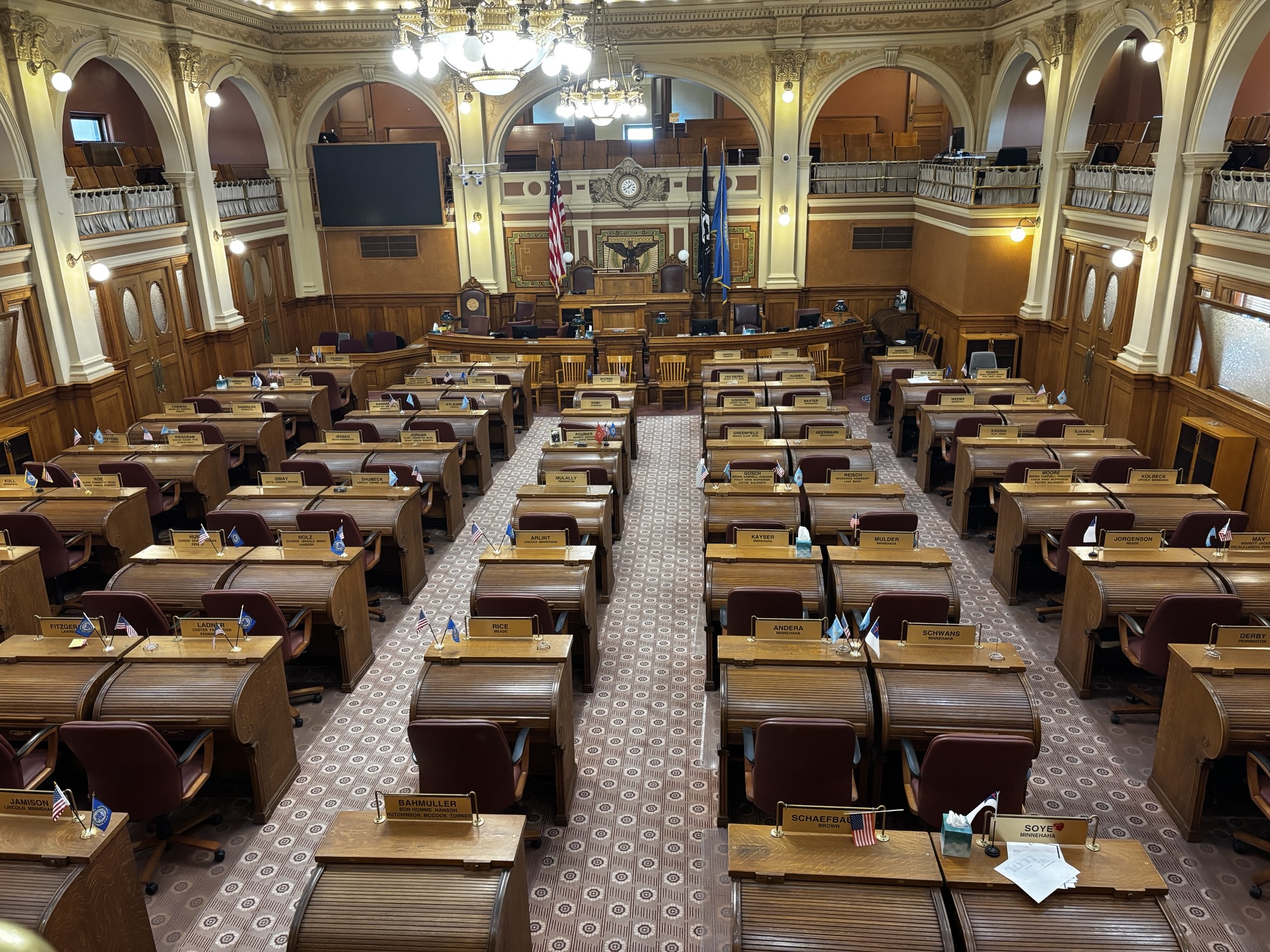
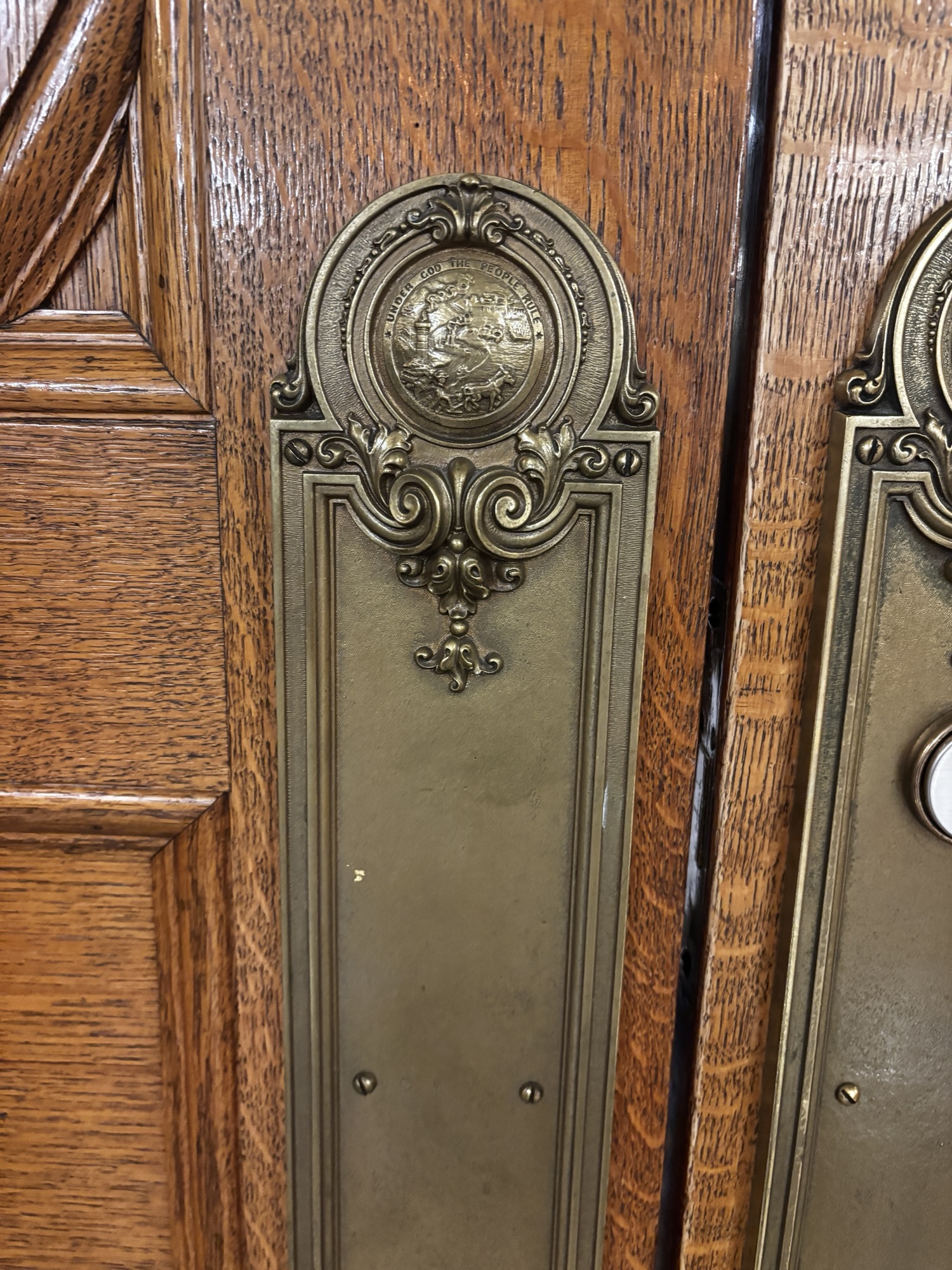
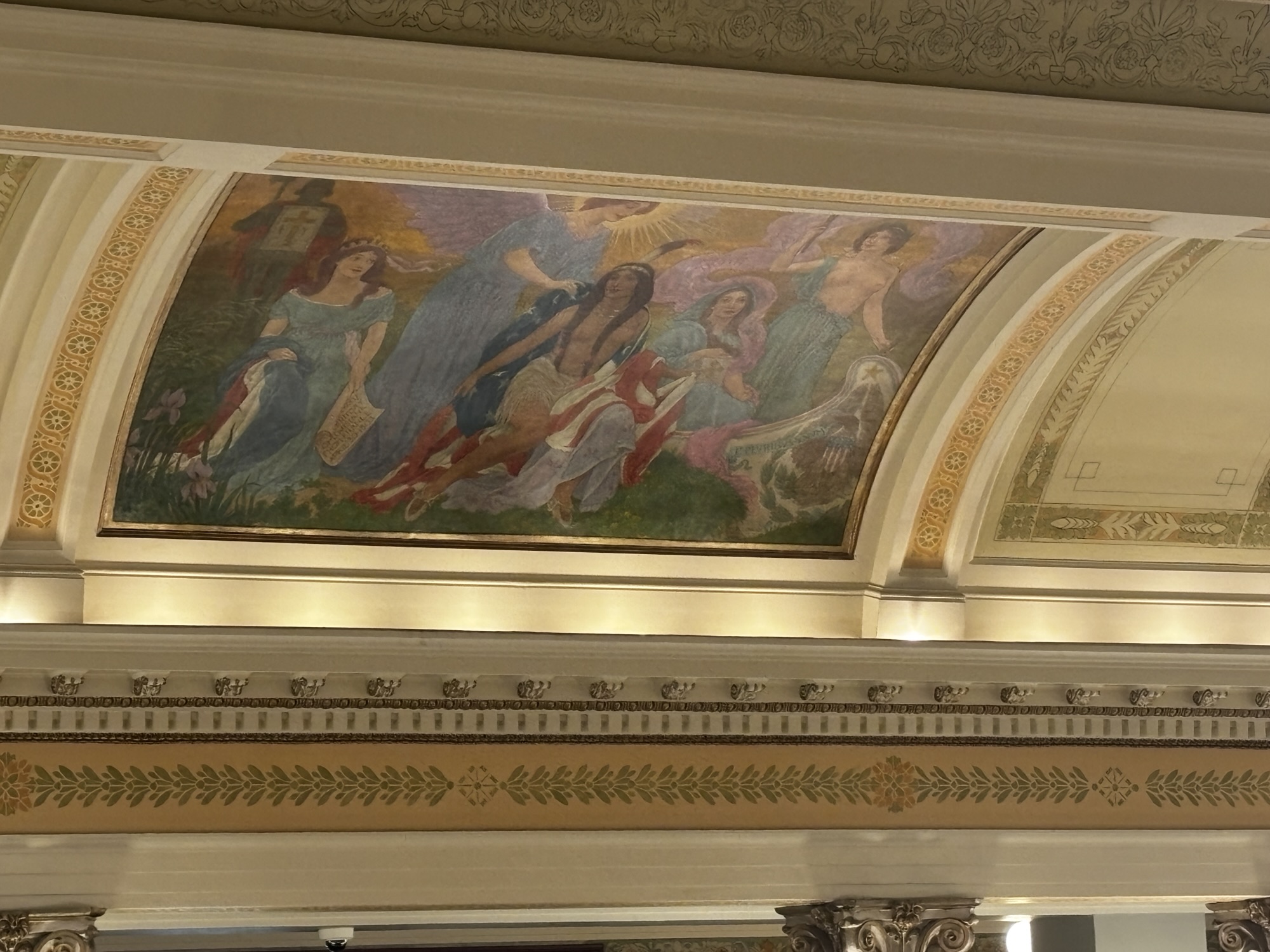
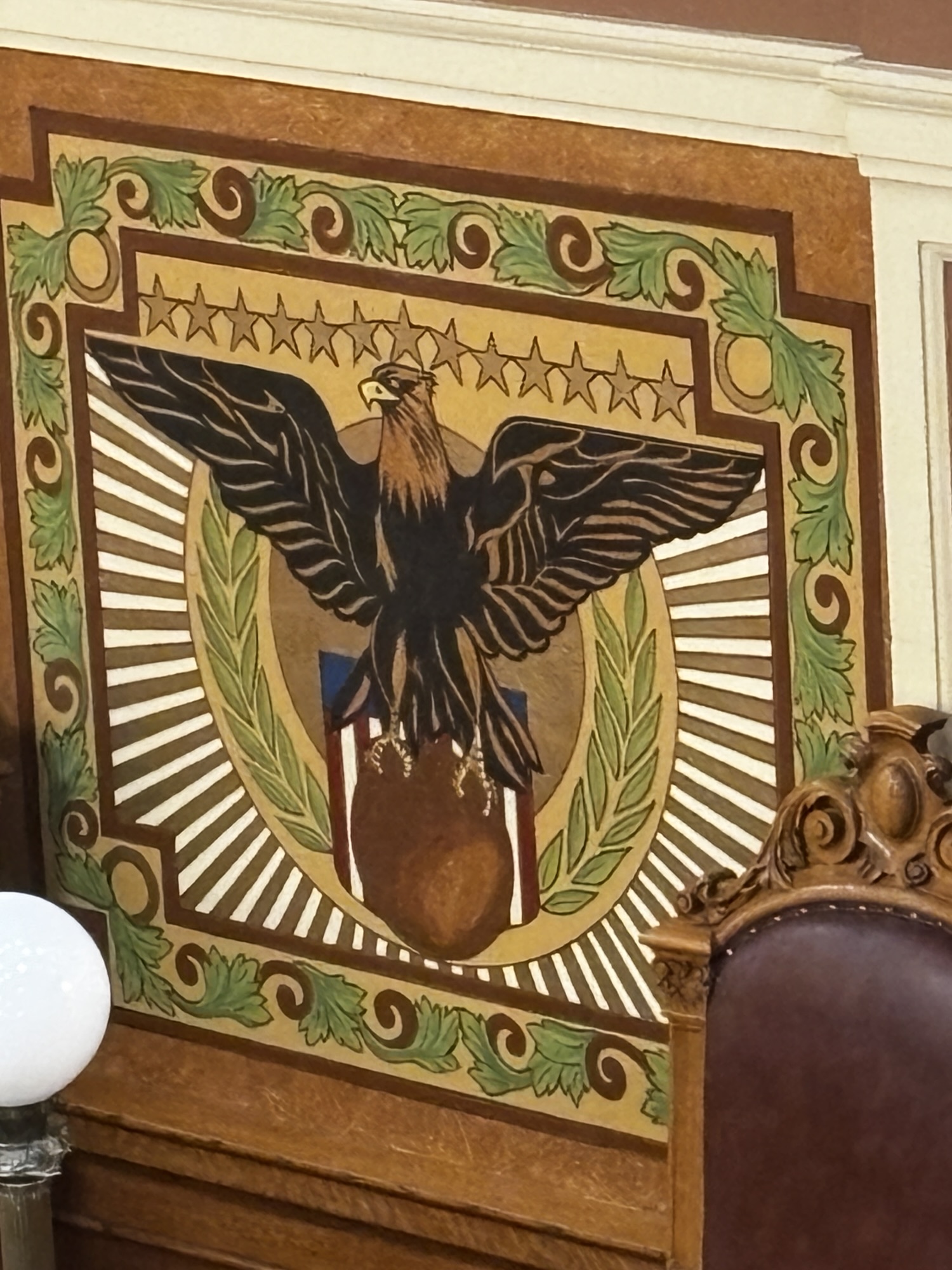
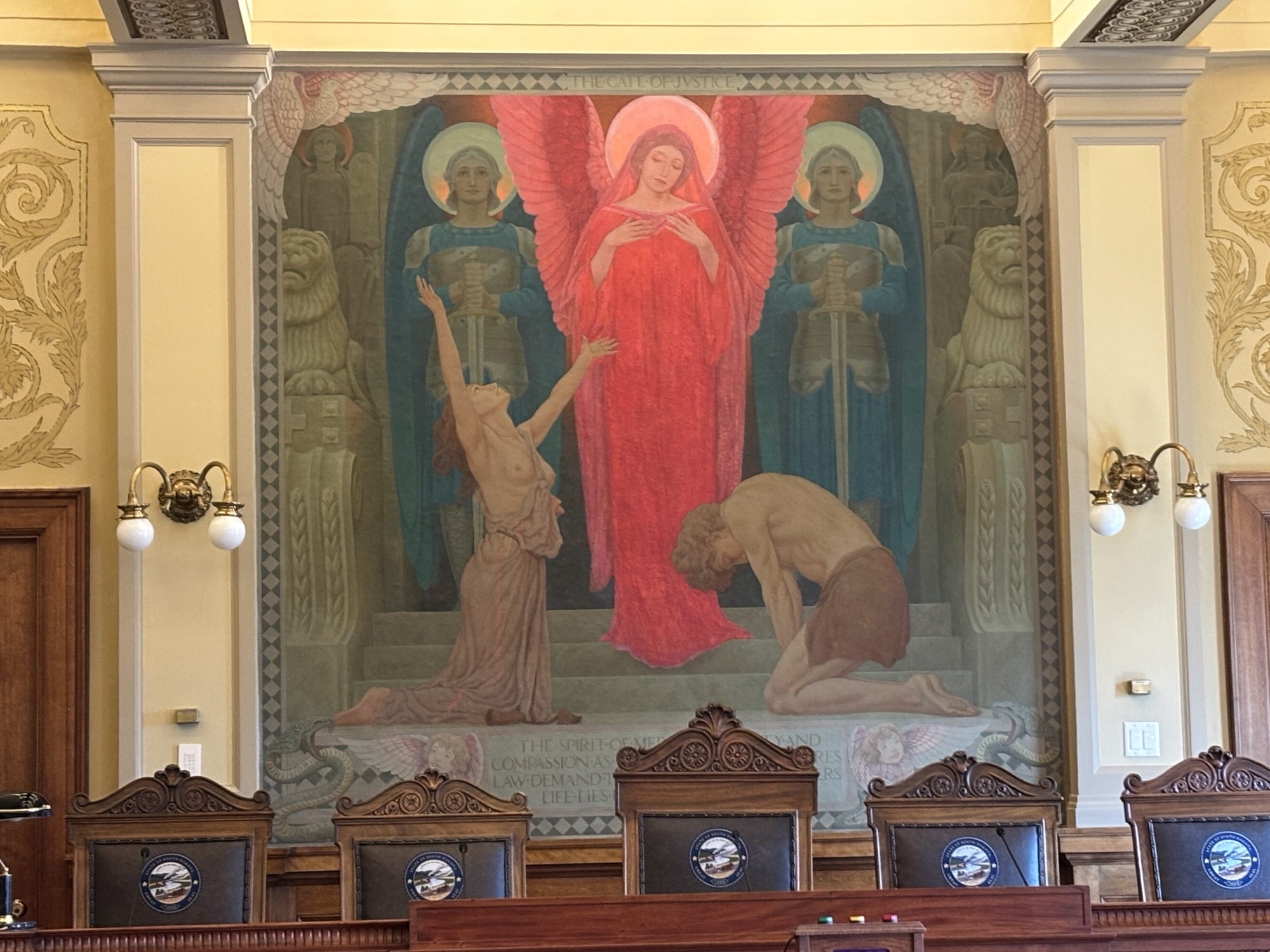
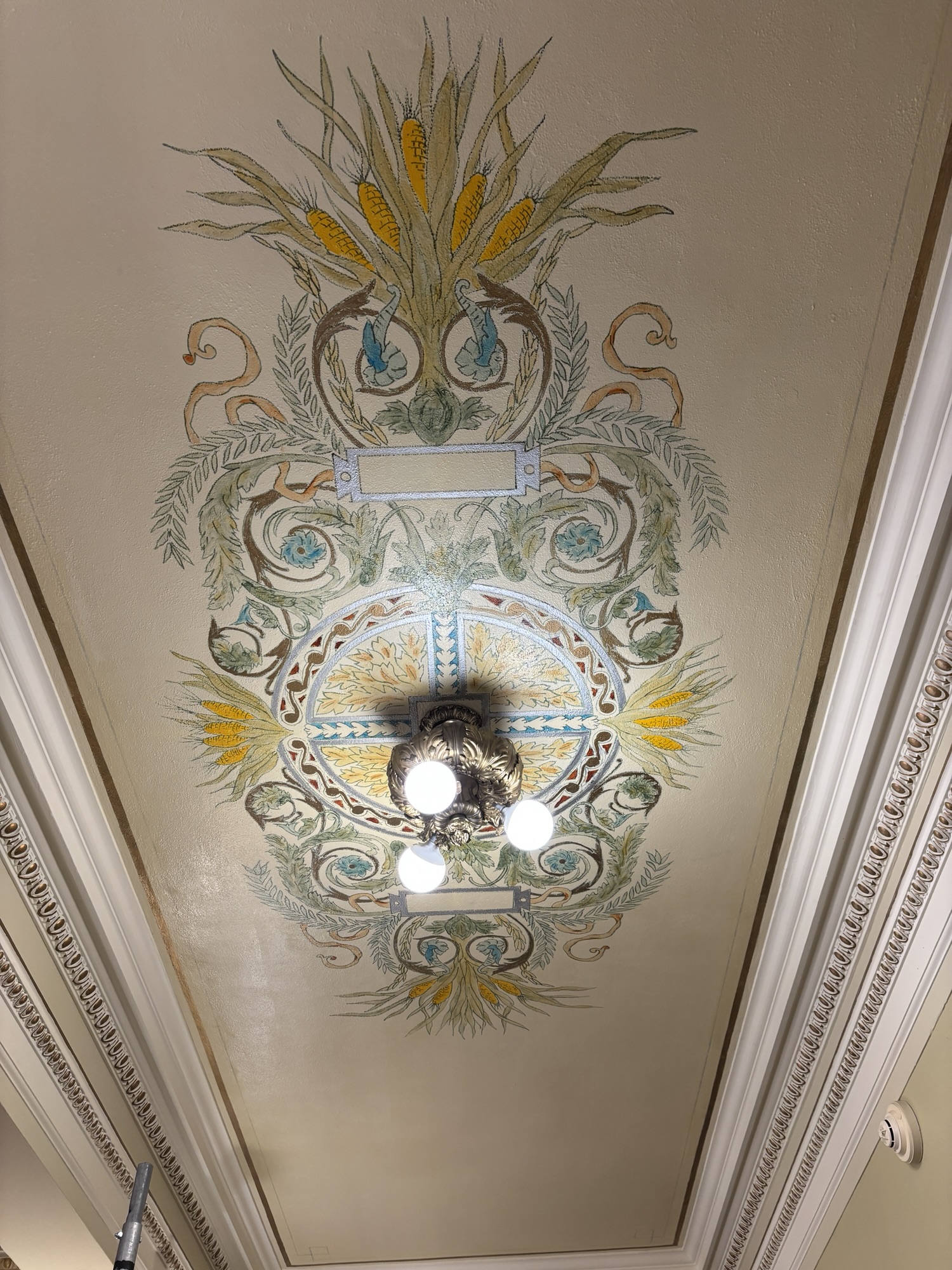
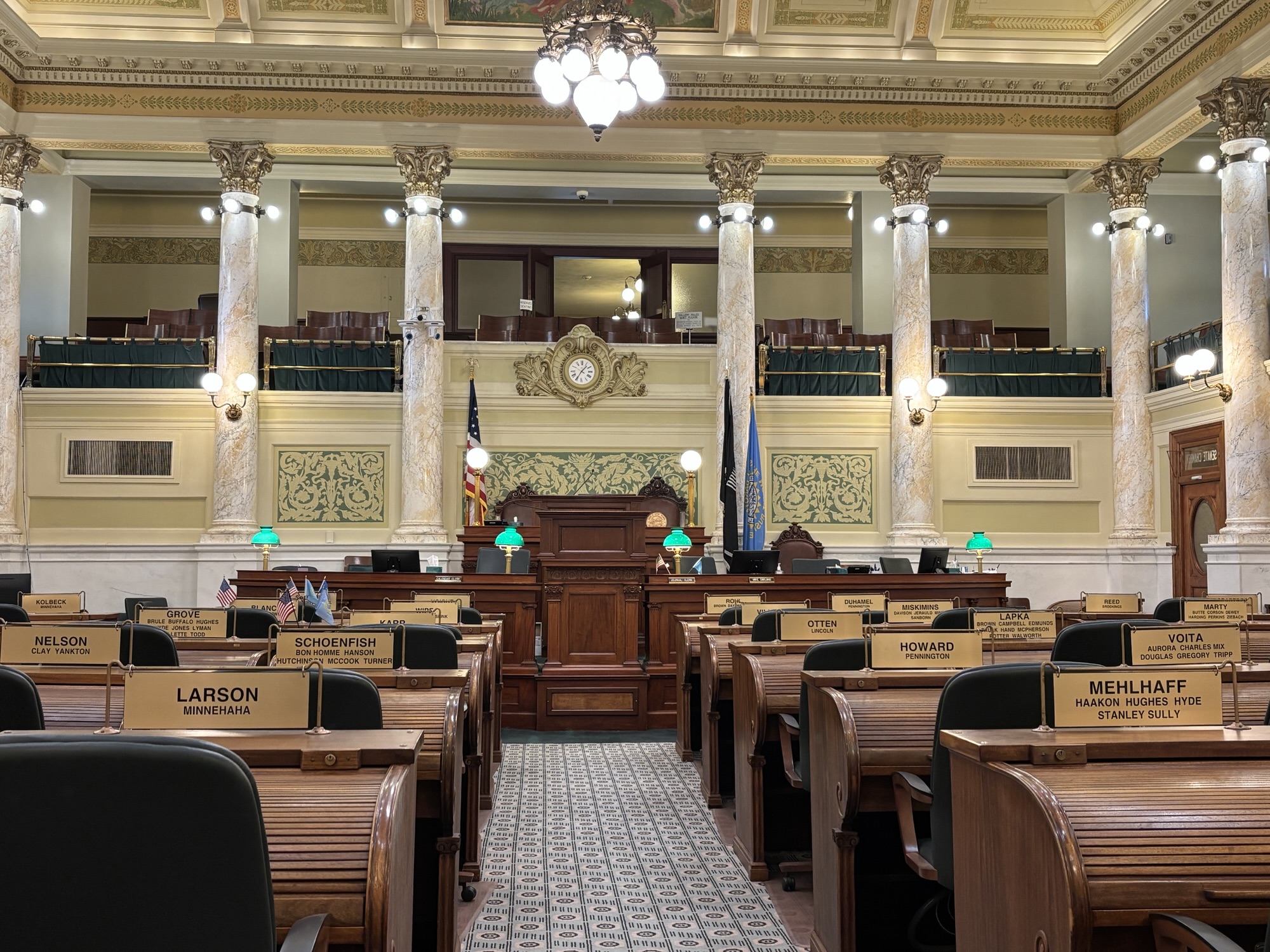
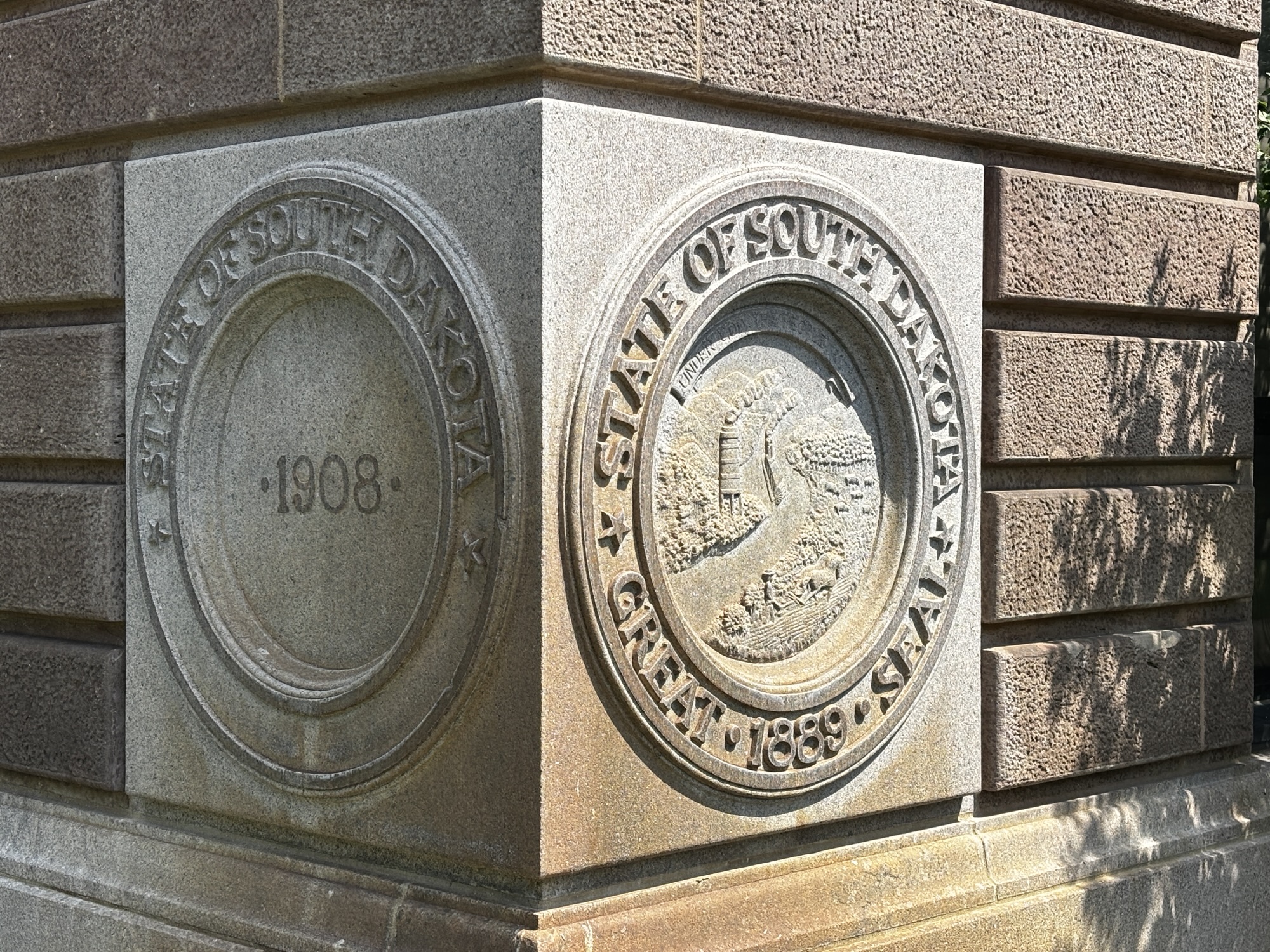
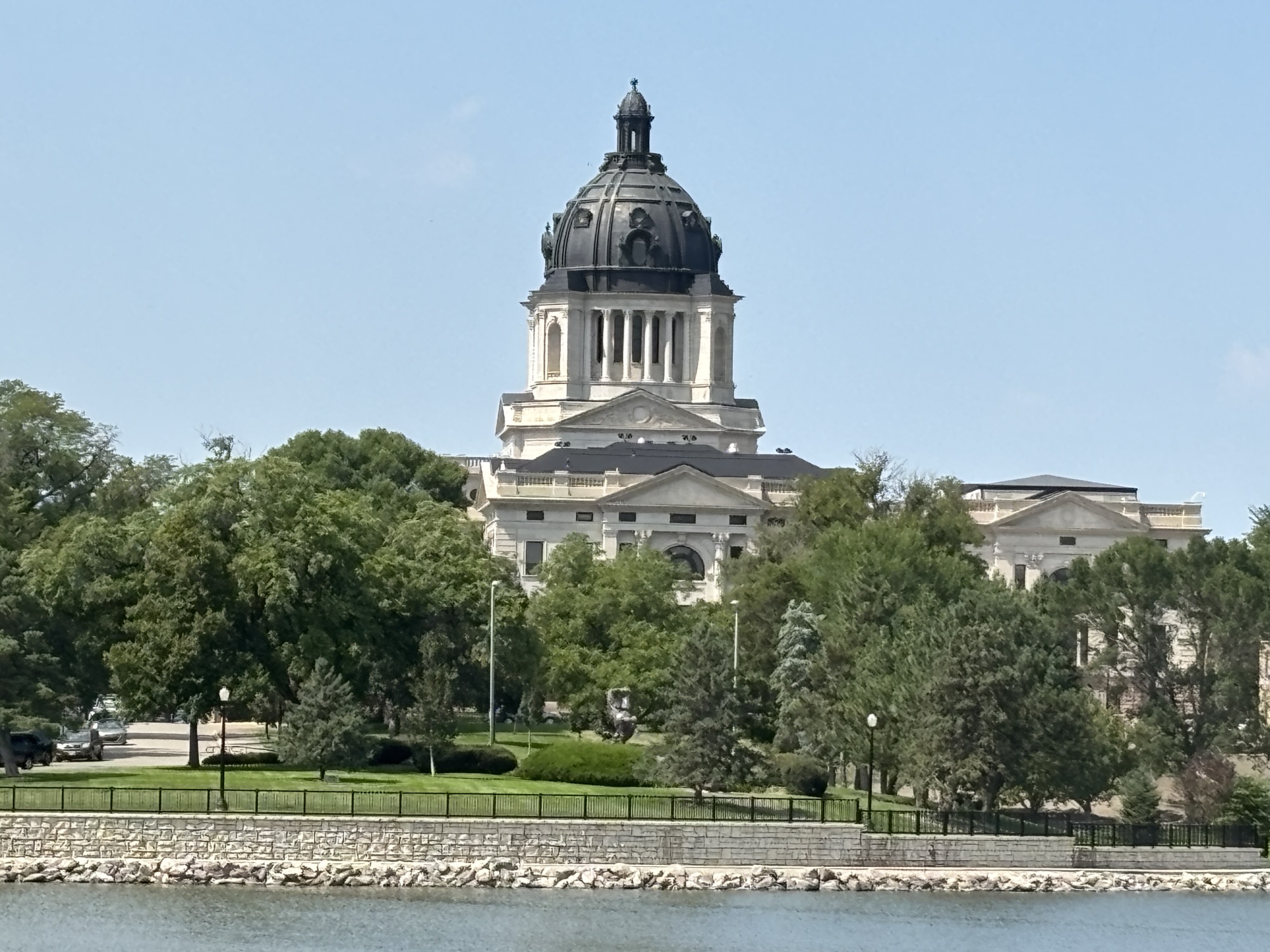
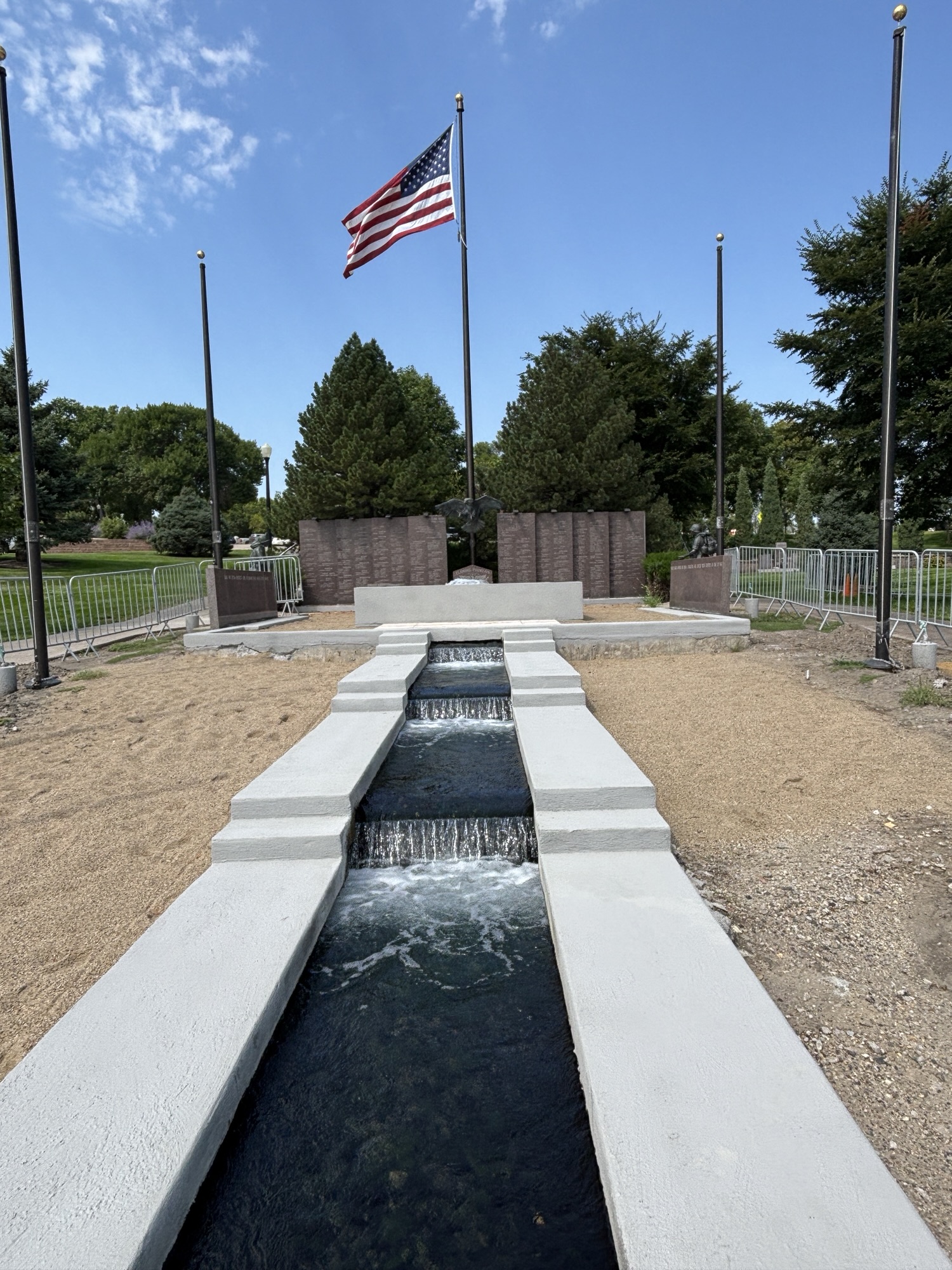
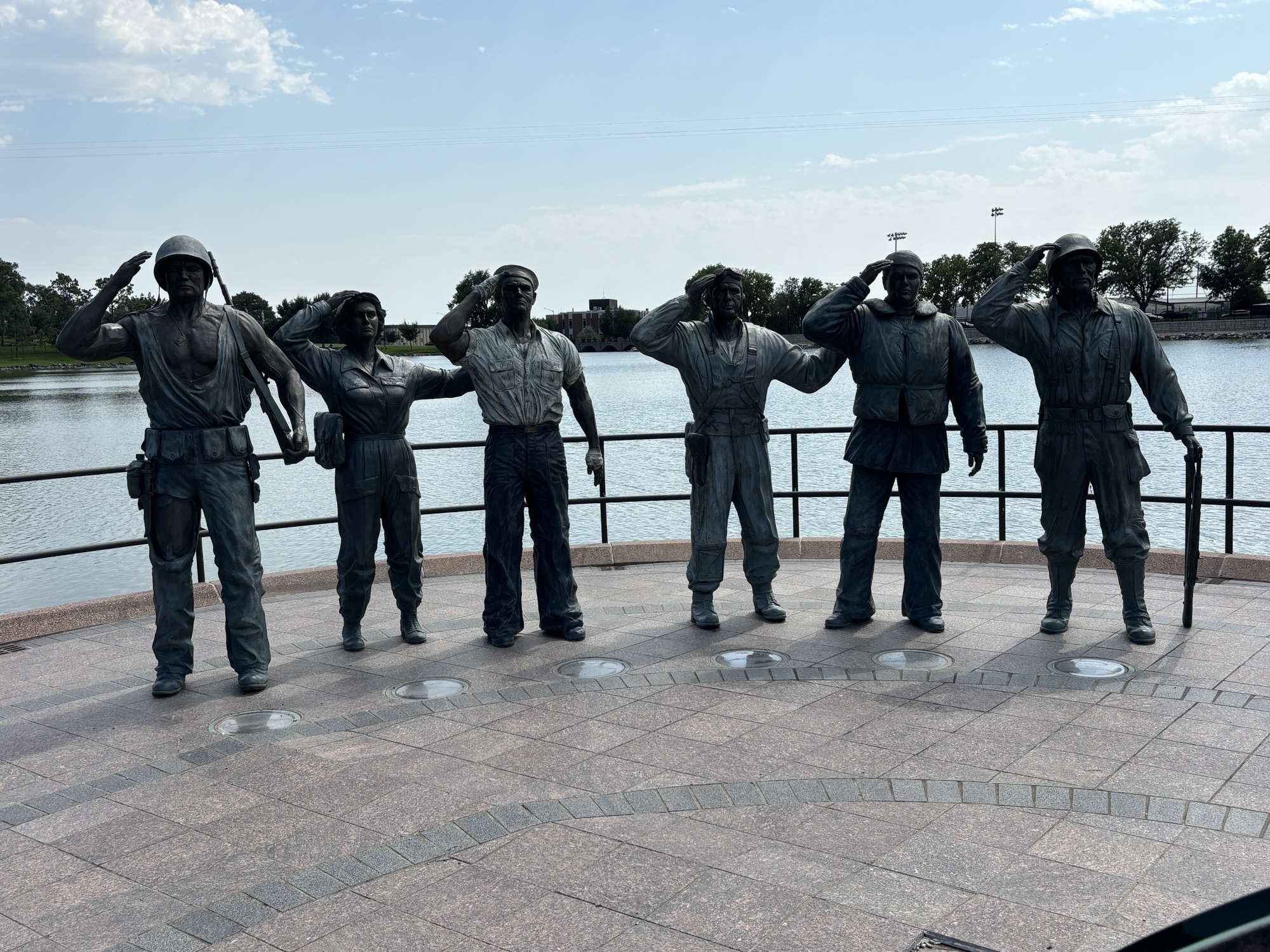
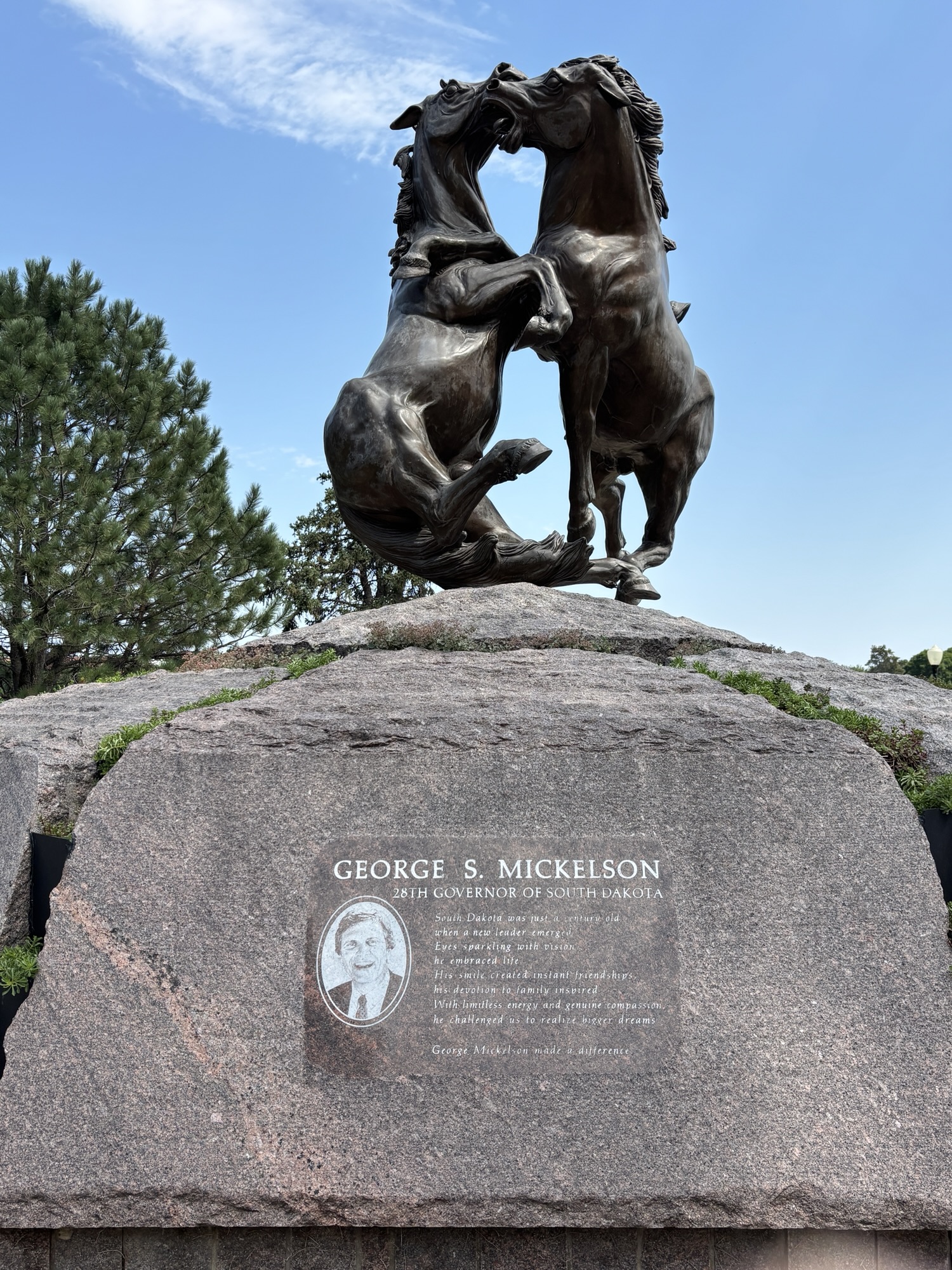
Then we headed out for a walk around the capitol grounds. There is a large pond (or small lake) near the building with a nice quiet area in the center. From there you can see the many memorials and statues. The main one is an impressive salute to the military branches and their contributions. And another somber memorial was to the 8 airplane crash victims in April 1993 that included a very popular state governor, George Mickleson. Fighting stallions was sculpted by Korczak Ziolkowaski who we found out more about later.
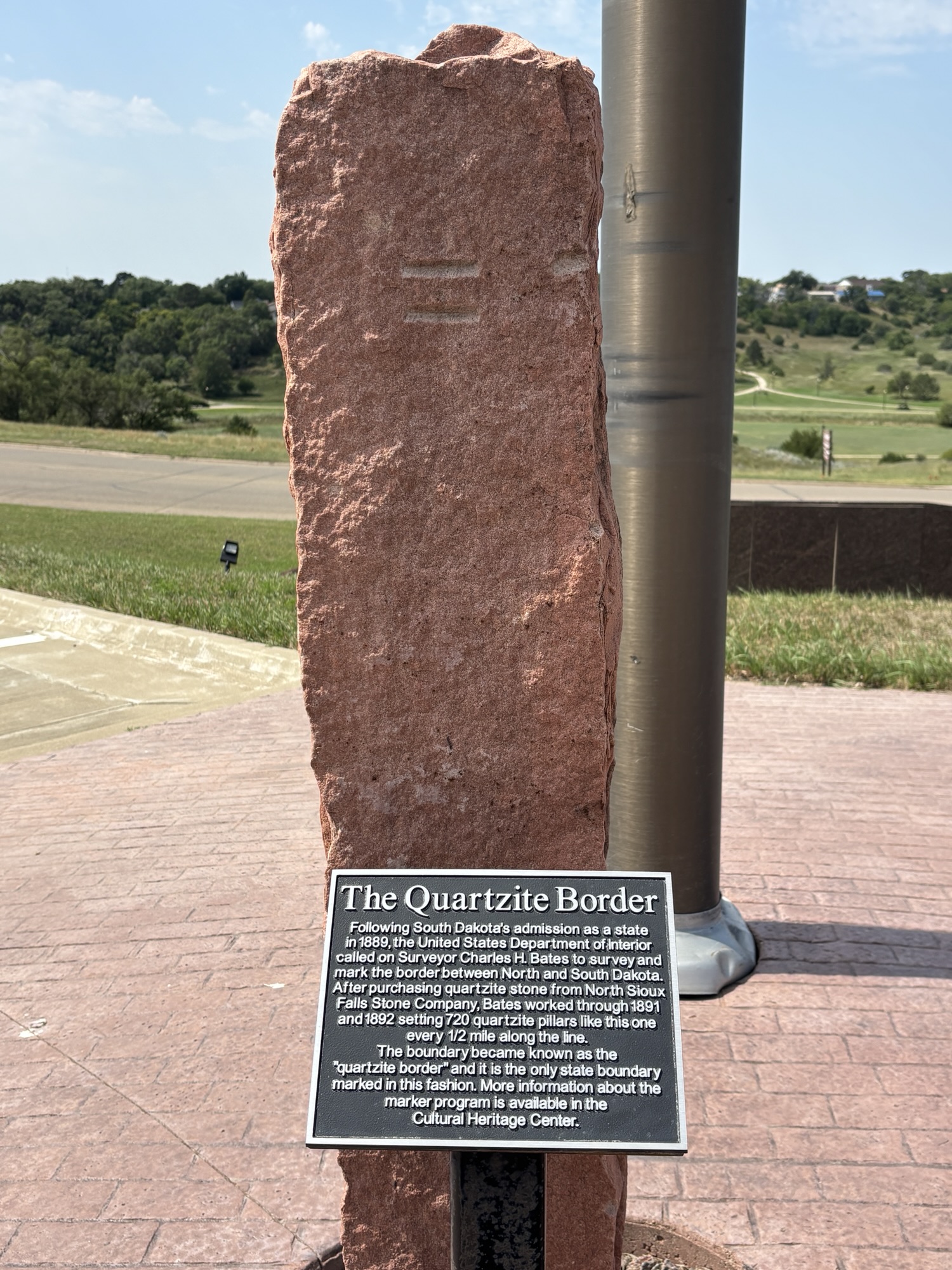
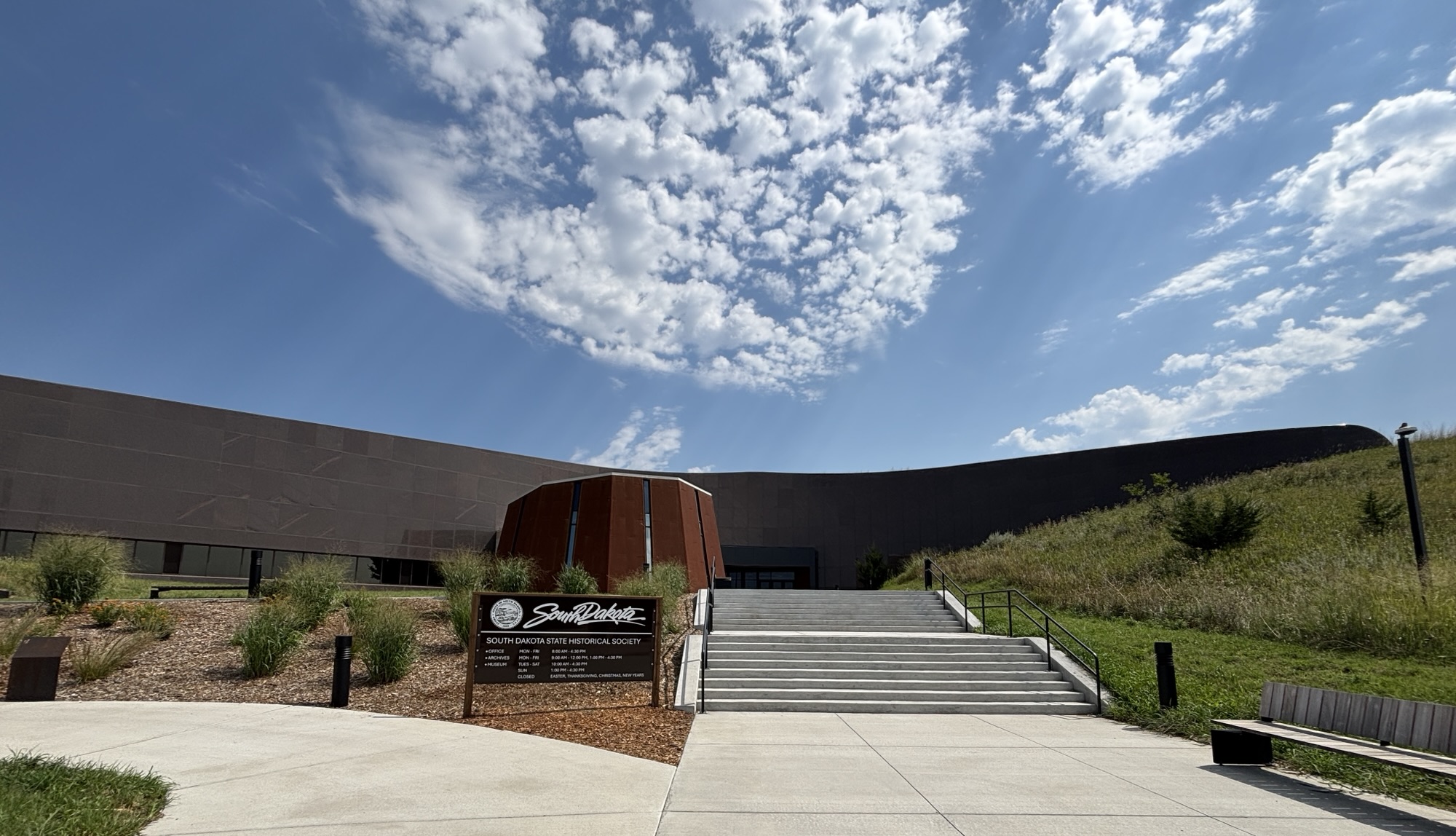
Finally, we tried to go to the Heritage Center, but it was closed. We took a few photos and read some of the history that was outside the building. Most interesting was a granite column that was part of “The Quartzite Border”, a row of 720 stone markers that were used to mark the border with North Dakota in 1891/1892. They were placed every ½ mile, and it is estimated that about half are still in place.
So, two states and two state capitals and two state capitols. We haven’t even been to the Florida capital or capitol. Maybe that will be on our list when we return. For now, let’s head further west and see what’s out on the prairie!

